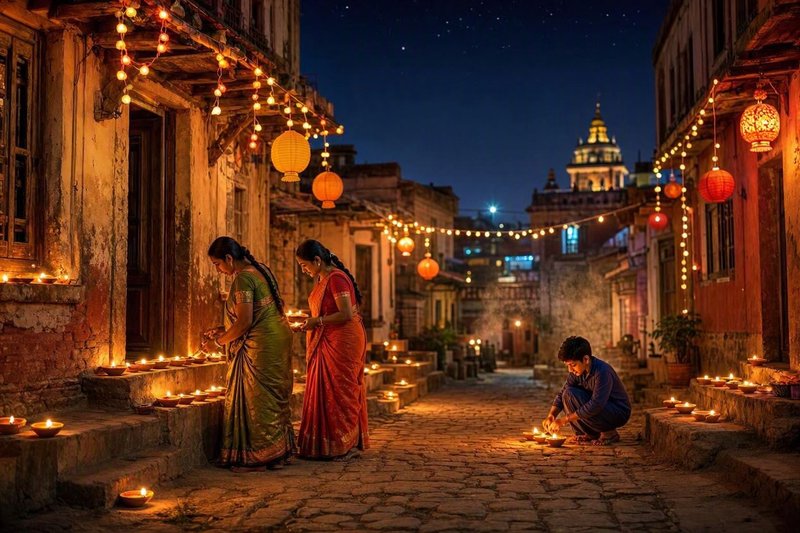
The term Naraka Chaturdashi links a tale of liberation with the fourteenth day of the lunar cycle. Chaturdashi denotes the fourteenth tithi; Naraka relates both to Narakasura and, in ritual context, to the domain of suffering. This name holds multiple meanings rather than one straightforward translation.
Understand the lunar setting
The observance takes place during the waning fortnight around Diwali. Month names may vary between the amanta and purnimanta calendar traditions: Ashwin and Kartik might refer to the same seasonal event in these distinct systems. A variation in the month name does not necessarily indicate a dispute over the festival.
Separate belief from a prediction
Traditional bathing prayers occasionally convey a desire to be liberated from Naraka. This devotional language centers on purification and well-being. It should not be interpreted as a warning that missing a bath will lead to a specific punishment.
Notice why dates can overlap
A tithi starts and finishes based on the shifting angular position between the Moon and the Sun. Its limits do not align with midnight. Consequently, a pre-dawn bath and an evening celebration may fall on different days depending on the year or place.
Explain the name at home
Provide a straightforward three-part explanation: a lunar day, a celebrated victory, and a desire to leave behind harmful habits. This approach maintains clarity while respecting the diversity of regional traditions without reducing them to a single set of rules.
References & further reading
Calendar and ritual references indicate specific traditions; actual household practices may vary. Practical planning tips serve as editorial advice. Be sure to choose your own city and year before relying on the times shown in a calendar.