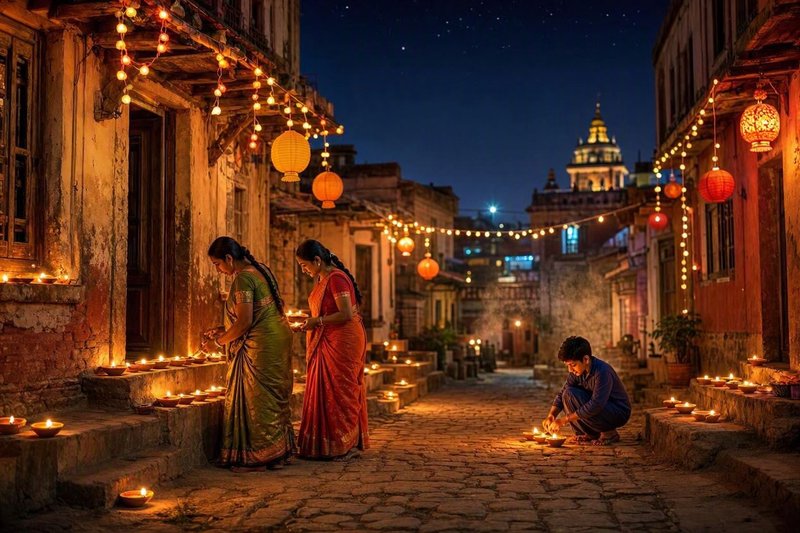
Bhoot Chaturdashi lends the Diwali season a unique Bengali character. The celebration is marked by lamps, memories of ancestors, and family tales. It is often described through fourteen diyas and fourteen kinds of leafy greens, although explanations and practices differ among families.
Begin with remembrance
Some families connect the lamps to fourteen generations of ancestors. Others focus on themes of protection, dispelling darkness, or inviting remembered relatives through the light. Present these as family meanings instead of insisting on a single agreed-upon origin story.
Arrange a gentle evening
Arrange clean lamp spots during daylight hours. Ask an elder to share a brief story about a person unfamiliar to the children. Mentioning a name, showing an old photo, or recalling a favorite dish can make ancestry seem personal instead of distant.
Give folklore its proper place
Tales of spirits can contribute to the ambiance, yet the celebration should not scare children. Clarify that families share stories and light lamps to symbolize connection, tradition, and love. Refrain from treating supernatural assertions as proven truths.
Keep related festivals distinct
Bhoot Chaturdashi occurs close to Kali Puja in the Bengali calendar, yet the two are distinct rituals and not synonymous. Consult a local panjika for the correct timing and check with the household about the specific customs they observe.