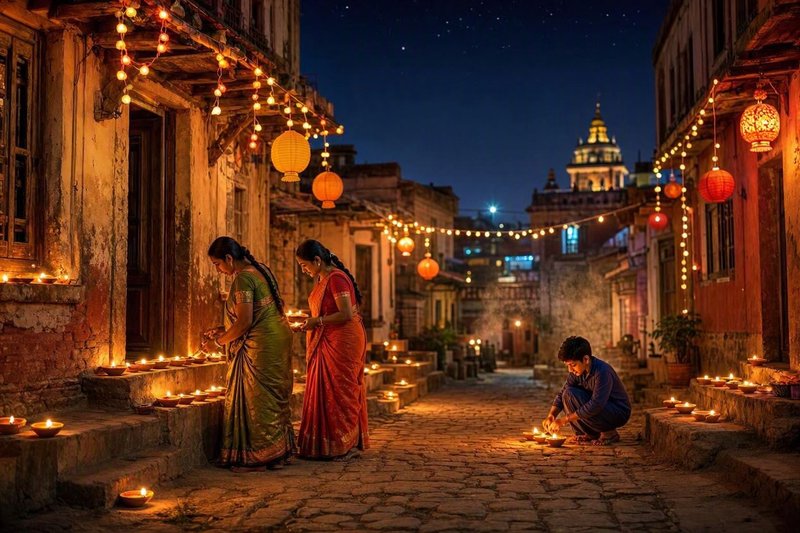
Bonfires and the burning of symbolic effigies feature in numerous local festival customs, but they are not an essential part of Choti Diwali everywhere. Goa's Narakasura effigies offer a specific example; other village accounts need to be understood in their own community setting.
Identify the custom before retelling it
Inquire about the local name, the organizers, and the story behind it. A bonfire observed around Diwali might be part of a separate event or community custom. Refrain from assuming an ancient origin solely because the scene appears traditional.
Appreciate collective preparation
Music, storytelling, craft, and communal food often create a memorable community gathering. Describe these elements with the same care as the concluding fire. A respectful visitor seeks permission before entering workspaces or taking close-up portraits.
Follow the organisers' boundaries
A public fire requires practical management, permits, and crowd control. Only attend events where organizers offer appropriate viewing areas, and verify the latest local schedule. Avoid creating a home bonfire to mimic a scene from an article.
Offer a symbolic alternative
Children can create a paper depiction of a harmful habit and put it in a recycling bin after talking about a healthier alternative. Renewal can be shown through a lamp, a story, or a shared community meal without the need to burn anything.
References & further reading
References to calendars and rituals indicate specific traditions; actual household practices may vary. Practical planning tips serve as editorial advice. Be sure to choose your own city and year before using the times shown on a calendar.