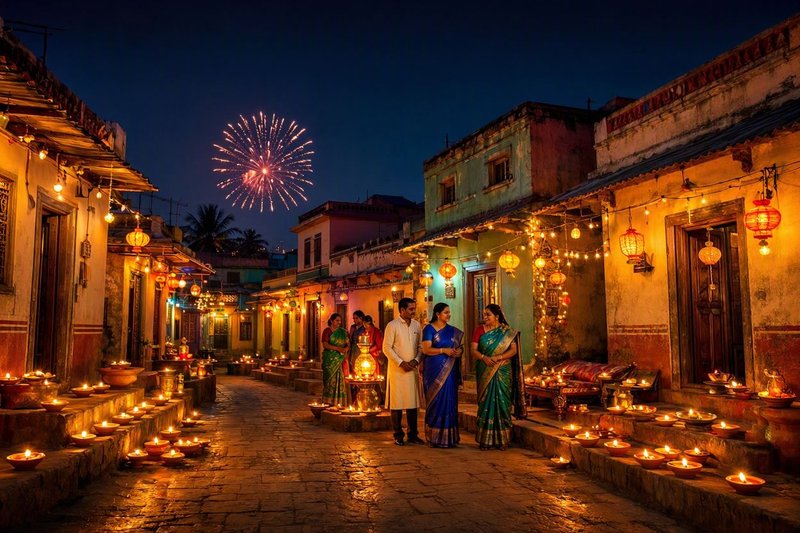
Diya photographs are most effective when they capture the warmth of the scene while ensuring people do not have to take any risks near the flames. Choti Diwali offers close details, portraits and household stories. Choose the picture you want before the lamps are lit.
Begin with a stable composition
Remove any visual distractions and select an angle that places the lamp on a secure surface. A tray, hands positioning unlit diyas, or an entrance feature can convey the narrative. Ensure children remain at a safe distance and do not relocate a lit lamp just to enhance the background.
Protect the flame detail
On a phone, tap close to the brightest spot and lower exposure if the flame appears completely washed out. Try several shots since camera apps differ. Using a compatible camera aids in low light; portrait subjects should remain relaxed and avoid uncomfortable poses.
Use surrounding light thoughtfully
A minimal level of ambient light can illuminate faces while maintaining a cozy ambiance. Do not position fabric or makeshift diffusers close to an open flame. Battery-powered lamps come in handy when setting up a posed portrait that requires frequent modifications.
Capture people as well as objects
With permission, capture the preparation, a communal greeting, and the completed meal. Snap a few shots, then set the camera aside. The evening ought to be an enjoyable experience for everyone, not a lengthy photo shoot disrupted by worship.
References & further reading
Calendar and ritual mentions pertain to specific traditions; household practices can vary. Practical planning tips serve as editorial advice. Choose your own city and year before applying the times shown on a calendar.