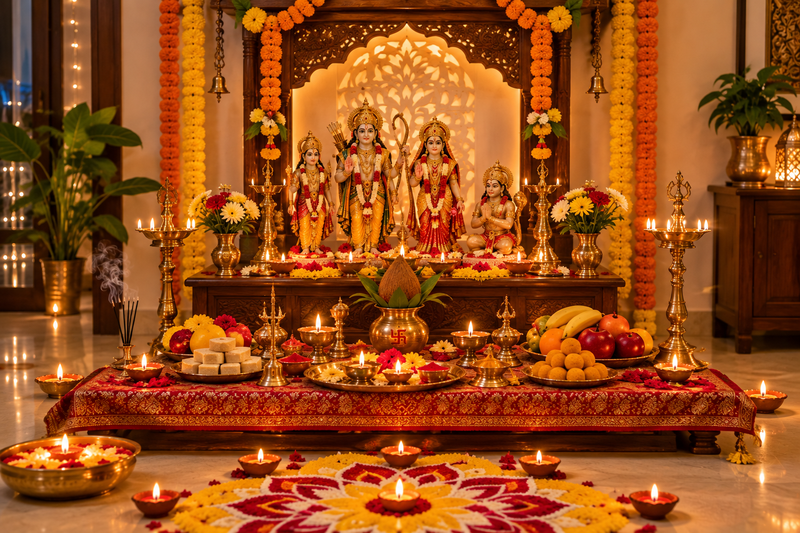
A Naraka Chaturdashi rangoli can surround a lamp, illuminate an entrance, or offer a communal creative experience. There is no single prescribed design that distinguishes it from Lakshmi Puja rangoli. Lotus shapes, dots, circles, and geometric borders commonly feature in festive home decorations.
Choose a design for the space
For a tight entryway, opt for a small circle surrounded by a ring of petals. A broader courtyard suits a dot grid or a repeated border pattern. Ensure there is ample clear floor space so people can enter without walking over the design.
Build from a simple outline
Identify the center, set the outer edge, and progress from broad shapes to finer details. Using two or three colors often appears more harmonious than a busy array. Allow children to color within a defined area while an adult oversees the main outline.
Select materials thoughtfully
Rice flour, flower petals, and appropriate rangoli powders produce varied effects. Take into account the floor surface, ease of cleanup, and who might come into contact with the materials. Steer clear of loose glitter near food or areas where it could be dispersed outside.
Add light without crowding the artwork
Position a lamp on a distinct heat-resistant stand away from the walkway. Battery-powered lamps are effective in a detailed setup. Capture a top-down photo of the completed design before evening activity begins, and document the pattern for future adaptation.