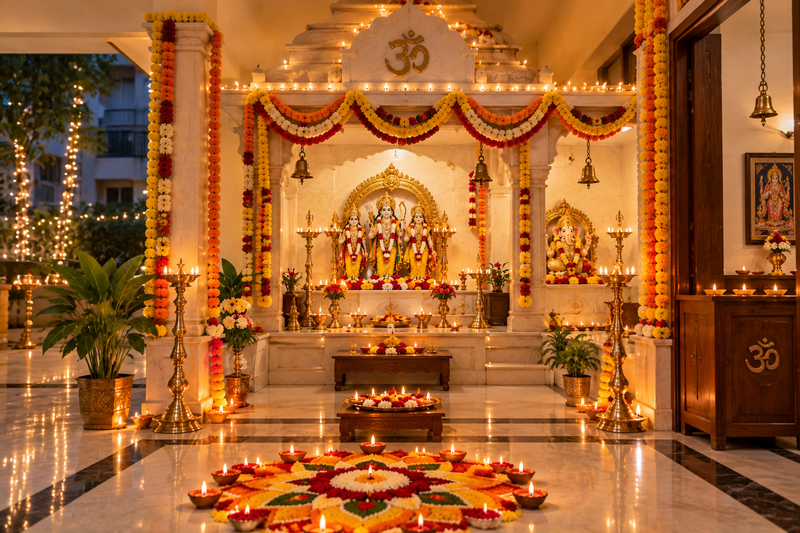
Vastu-inspired explanations of Choti Diwali lighting frequently link direction, entryways, and energy flow. These are conventional design principles, not assured promises of wealth or safety. An effective home layout can honor family choices while prioritizing solid foundations and unobstructed pathways.
Draw the room before lighting
Identify the entrance, puja area, and spots where people will sit or walk. Select one or two focal points instead of placing a flame in every corner. A thoughtfully arranged display allows space for regular household activity.
Understand the directional custom
In certain families, a south-facing lamp might be part of a Yama-related offering. Lamps in other directions serve different purposes. Confirm the specific ritual being conducted before imposing a single directional guideline on the whole house.
Adapt fourteen-lamp arrangements
The fourteen-lamp custom is particularly linked to Bengali Bhoot Chaturdashi and is not a mandatory Vastu guideline for every Choti Diwali household. If your family observes this tradition, arrange the lamps together in visible spots instead of placing them in unsafe or scattered areas.
Let care guide the final placement
Use heatproof holders, keep fabrics at a distance, and opt for battery-operated lamps in hard-to-reach spots. A dark corner does not indicate that a home harbors negative energy. The arrangement can convey hospitality through careful placement, without making the layout a cause for concern.
References & further reading
References to calendars and rituals indicate specific traditions; actual household practices can vary. Practical planning tips serve as editorial advice. Be sure to choose your own city and year before using the times shown on a calendar.