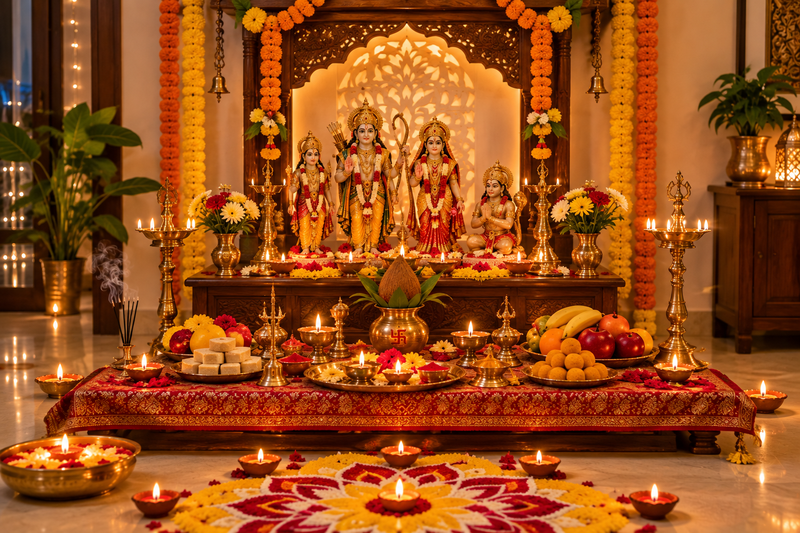
An akhand jyot is a lamp meant to burn continuously as part of a devotional practice. While some homes keep one lit during festivals, maintaining an unbroken flame for five days is not a common requirement for Choti Diwali. Sustaining the flame involves both practical effort and spiritual purpose.
Decide whether the home can support it
A flame must always be monitored while it is burning. Take into account sleep, work, pets, children, and the location of the worship area. If continuous supervision is not possible, consult a trusted religious advisor about observing the lamp for a shorter duration.
Prepare the setting carefully
Use an appropriate lamp on a stable, heat-resistant surface, away from fabrics and moving air. Keep the area uncluttered. Avoid makeshift arrangements designed to extend the burn beyond the lamp's intended use.
Do not make continuity a source of fear
A flame may extinguish for common reasons. Refrain from telling family members that an unintentional interruption signals bad luck. Religious advice should encourage the household to react calmly instead of pressuring anyone to refill unsafely or leave the flame unattended.
Make a suitable alternative meaningful
A lamp lit during a supervised prayer session can signify the start and end of each day. Battery-powered light can create ambiance between these times, while remaining clearly different from an oil-flame ritual if that difference is important to the household.
References & further reading
References to calendars and rituals indicate specific traditions; actual household practices may vary. Practical planning tips are provided as editorial advice. Choose your own city and year before applying the times shown on a calendar.