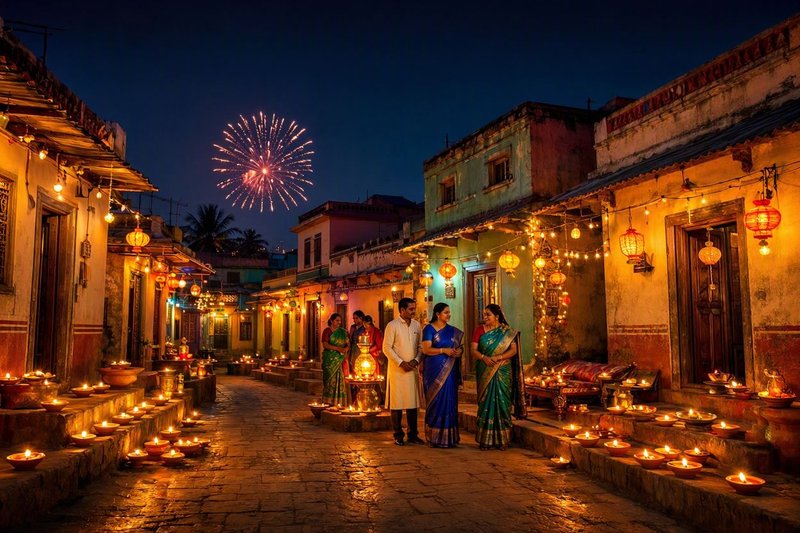
Choti Diwali and Badi Diwali occur within the same festive period, yet the terms do not refer to the exact same timing across all communities. In much of North India, Choti Diwali suggests Naraka Chaturdashi and preparation, while Badi Diwali points to the principal evening of lamps and Lakshmi Puja.
Compare the focus
Choti Diwali typically emphasizes an early bath, preparing the home, and regional customs of protection or remembrance. The primary Lakshmi Puja evening usually focuses on Lakshmi and Ganesha, family prayers, guests, and a more elaborate celebration. These are general practices, not measures of religious accuracy.
Allow for calendar overlap
The two observances do not have to fall on different civil dates. The lunar period regulating a dawn bath and that governing evening worship can take place on the same day. A festival calendar ought to specify each activity and its corresponding rule instead of merely numbering the days.
Recognize southern Deepavali
For numerous Tamil families, the early morning of Deepavali is the highlight, marked by bathing, donning fresh clothes, exchanging greetings, and enjoying food. Describing this as just a prelude to a northern evening festivity would underestimate its significance.
Plan the work sensibly
Take advantage of the quieter time to check supplies and prepare food that keeps well. Set aside moments for rest and family discussions. A substantial second shopping trip or another full feast is optional, not a requirement dictated by the terms small and big.
References & further reading
References to calendars and rituals indicate specific traditions; actual household practices may vary. Practical planning tips serve as editorial advice. Be sure to choose your own city and year before using the times shown on a calendar.