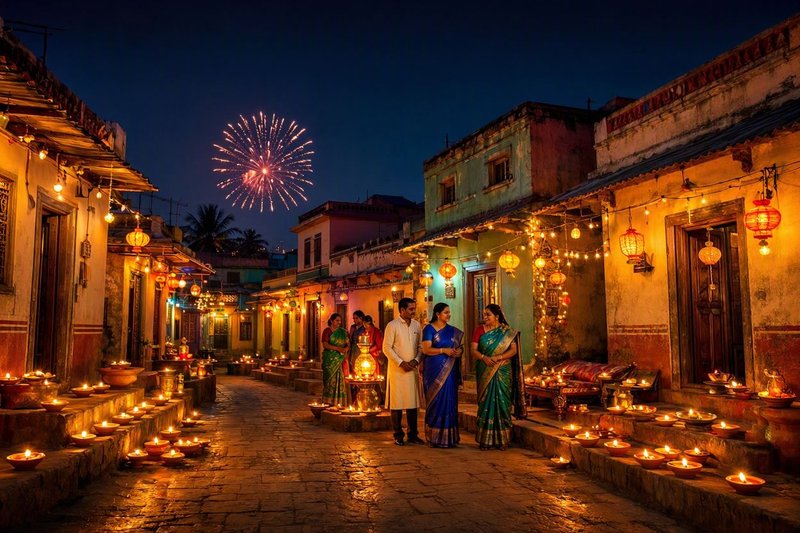
The Narakasura tale provides Choti Diwali with a central theme: power must be held accountable to justice. In commonly recounted versions, Krishna faces the king of Pragjyotishpura, accompanied by Satyabhama. The story concludes with prisoners being freed and a community moving beyond fear.
Read the story as a living tradition
Puranic narration, regional performance and family storytelling do not always assign the same role to every character. Some popular retellings place Satyabhama at the decisive moment of Narakasura's defeat; others emphasize Krishna. Introduce the version you are telling rather than presenting a single account as the only authentic one.
Put the freed women at the centre
The narrative is frequently condensed into a battle and the capture of many women, commonly cited as 16,000 or 16,100. The ethical focus lies in their liberation from oppression and the reclaiming of their dignity. Do not portray their suffering merely as an ornamental element within a heroic tale.
Tell it to children thoughtfully
Start by addressing the issue of someone abusing their power, then discuss the bravery needed to confront unfairness, and conclude with the idea of freedom. Avoid graphic violence. Encourage children to draw a lamp symbolizing kindness or to write a sentence about defending someone who is left out.
Connect story and celebration
A diya can symbolize the dispelling of fear and the duty to wield strength wisely. This understanding creates a meaningful connection between mythology, daily behavior, and the celebratory household.
References & further reading
References to calendars and rituals denote specific traditions; actual household practices can vary. Practical planning tips serve as editorial advice. Be sure to choose your own city and year before applying the times shown on a calendar.