Goa's Narakasura tradition brings neighbourhood craftsmanship and storytelling into the Diwali season. Community groups create striking effigies, and their destruction recalls the defeat of Narakasura. The spectacle belongs to a living local celebration, with details that vary between neighbourhoods.
Look at the work behind the display
Effigies blend frameworks, paper, paint, and creative character design. Talking about how they are made encourages visitors to value the creators instead of seeing the event solely as a fire show. Always ask for permission before taking photos of individuals working closely on a display.
Check the actual local programme
Don’t assume every effigy follows the same statewide route or burning time. Check with the organisers about viewing spots, road access, and that year’s schedule. Plan your transport and set a meeting place before joining a large crowd.
Watch from the designated area
Fire, smoke, debris, and crowds of spectators can make the final stage unsuitable for very young children or those who prefer a quieter environment. Keep exits in sight and observe all barriers. Families can appreciate the completed displays earlier without staying for the dismantling.
Tell the story after the spectacle
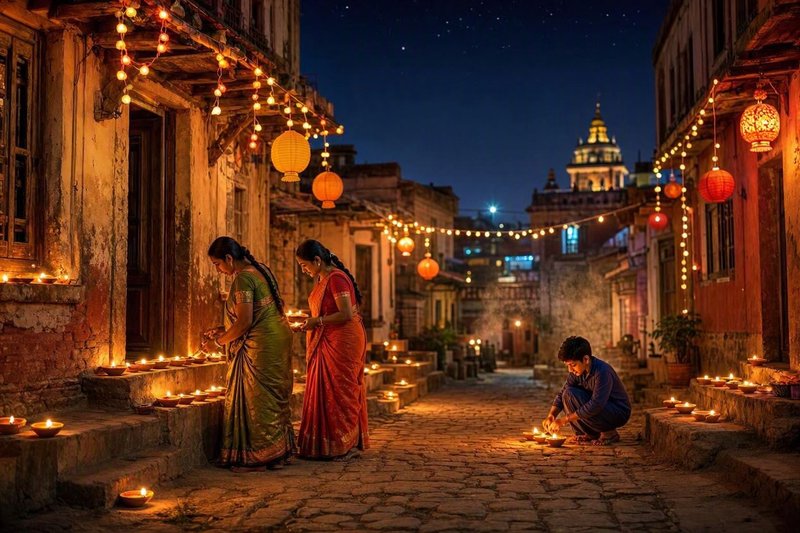
Connect the event with the defeat of cruelty and the community's shared creative effort. The supplied Diwali illustrations on this page are atmospheric images, not documentary photographs of a particular Goan effigy or event.
References & further reading
References to calendars and rituals indicate specific traditions; actual household practices may vary. Practical planning tips serve as editorial advice. Be sure to choose your city and year prior to using the times shown on a calendar.