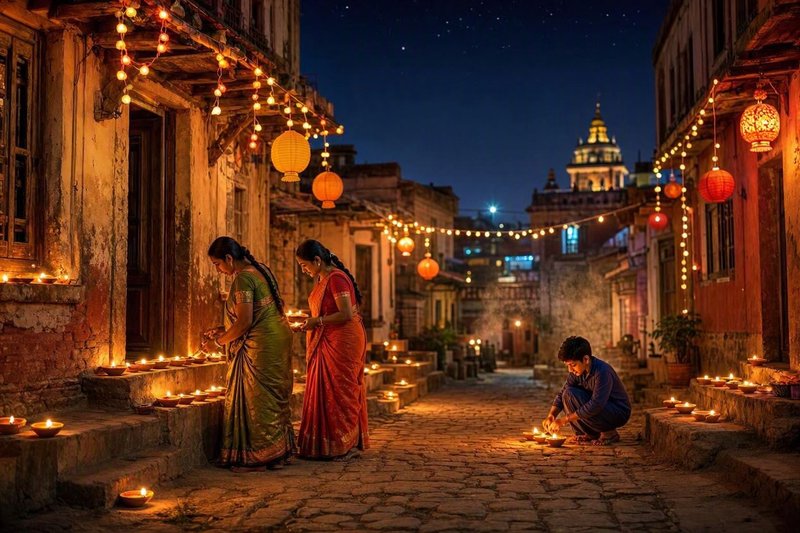
Fourteen lamps hold a special significance in Bengali Bhoot Chaturdashi rituals. This number is frequently associated in family traditions with honoring ancestors. Other Choti Diwali households light different numbers, so fourteen diyas should not be presented as a universal requirement across India.
Give each lamp a thoughtful place
An entrance, a tidy courtyard border, a window sill intended for a lamp, and a monitored puja space can create a soft pathway of light. Plan the layout with a sketch before placing the diyas. Avoid unstable railings, curtains, stair edges, and spots where a lamp could be easily tipped over.
Remember people rather than counting anxiously
Ask relatives to identify an ancestor, recount a generous deed, or share a family story. Some families trace back fourteen generations; others interpret the custom in another way. The key editorial difference lies between a significant tradition and a mandatory routine applied to every home.
Adapt the display to the home
A small apartment might not accommodate fourteen appropriate flame spots. Arrange a monitored cluster of clay lamps in one secure area and use battery-powered lights in other places. Avoid placing lamps near trash or flammable materials, even if older guidelines suggest lighting neglected corners.
Make the evening participatory
Have children organize unlit lamps or create a placement sketch while an adult manages the lighting. Take a photo of the completed setup before anyone starts moving around the area.
References & further reading
Calendar and ritual references indicate specific traditions; actual household practices may vary. Practical planning tips are provided as editorial advice. Choose your own city and year before applying the times shown in a calendar.