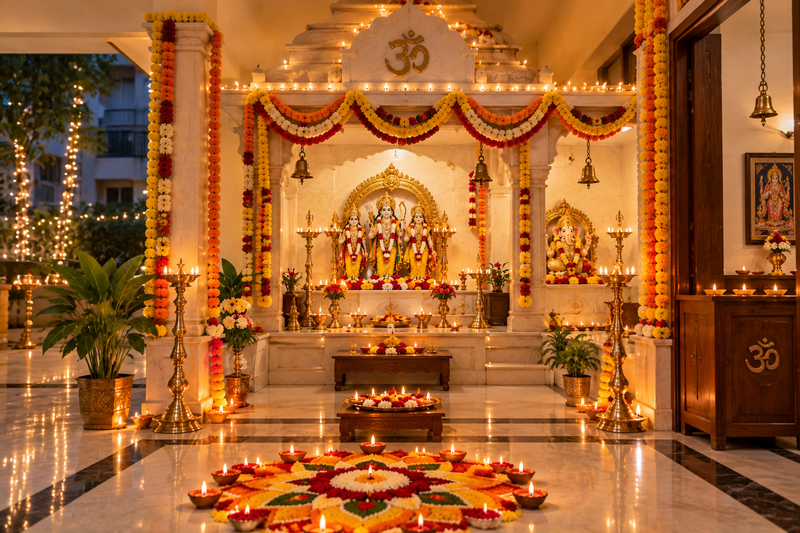
Chaturdashi timing is rooted in the Hindu lunar calendar. A tithi tracks a twelve-degree interval in the Moon's angular separation from the Sun. Its length and its placement within a civil date vary, which explains why a single fixed clock time cannot serve every Choti Diwali observance.
Astronomy and interpretation
The tithi is determined by the relationship between the Sun and the Moon. Religious calendars subsequently set observance guidelines based on dawn, sunset, or other times of the day. Wider astrological interpretations are part of belief systems and should be separated from the actual astronomical calculations.
Ask which ritual you are timing
Abhyanga Snan is linked to the time before sunrise. Kali Chaudas follows a separate night-based timing in calendars that set it apart. Lakshmi Puja involves its own specific evening timing. The time designated for one ritual should not be applied to another.
Read a local panchang carefully
Choose the city, year, and time zone, then review both the tithi interval and the specified ritual period. Verify if the shown times go past midnight. Families living overseas should rely on their local time instead of simply adjusting an Indian clock time.
Keep a useful planning note
Include the activity, local date, start and end time, city, and source together. This brief record helps avoid confusion when family members share screenshots without enabling location settings.
References & further reading
References to calendars and rituals indicate specific traditions; actual household practices may vary. Practical planning tips serve as editorial advice. Choose your city and year before consulting the calendar’s shown times.