At a glance
- Name the tradition behind each sacred narrative.
- Keep Rama, Narakasura, Govardhan, Kali and Bali accounts distinct.
- Use storytelling to invite questions and preserve family memory.
Begin with the tradition behind the telling
Diwali does not have one origin story accepted in the same form by every celebrant. Some accounts come from Hindu epics or Puranic traditions; others reflect later devotional retellings, regional performance and family memory. A familiar festival explanation can combine these layers without spelling out where each detail comes from.
For a family reading or school presentation, introduce the account with a phrase such as “Many families in North India tell this story at Diwali.” That preserves its meaning while making room for someone whose family remembers another narrative. Sacred stories deserve respectful telling without being presented as independently verified historical reporting.
Rama’s return: the welcome of home
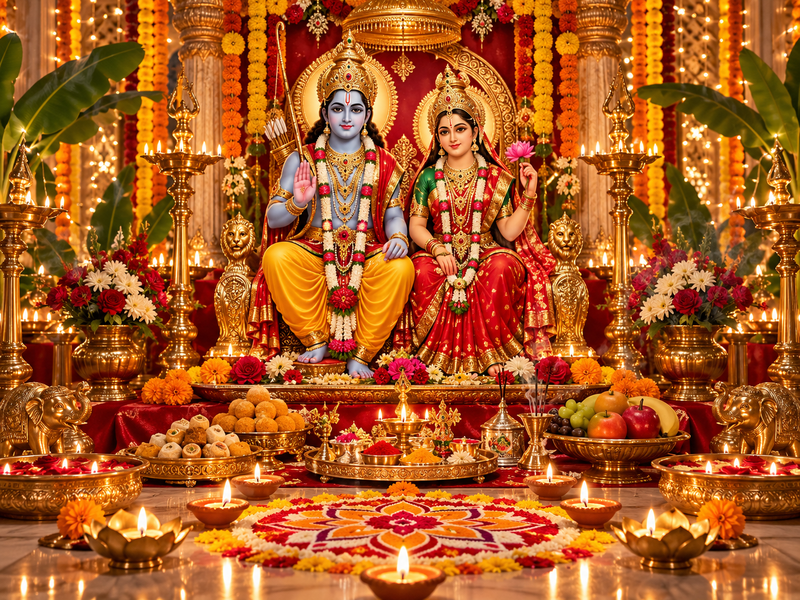
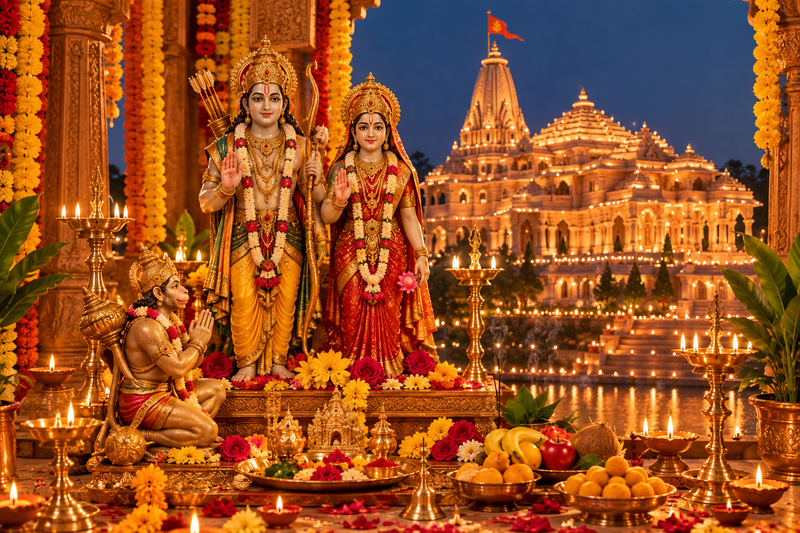
In a widely shared North Indian tradition, Diwali recalls Rama’s return to Ayodhya after exile, accompanied by Sita and Lakshmana. The homecoming follows the defeat of Ravana. Popular festival retellings describe lamps welcoming them back, making light an image of relief, reunion and restored order.
The emotional centre is the welcome. For children, the useful question is not simply who won a battle, but what makes a homecoming generous: who is included, who has waited, and how a community receives someone returning after difficulty. The Rubin Museum places this account among several Diwali traditions rather than making it the explanation for them all.
Krishna and Narakasura: relief from oppression
Naraka Chaturdashi is associated in parts of southern and western India with the defeat of Narakasura. Retellings give Krishna and Satyabhama different degrees of emphasis, so a short version should acknowledge that variation. The broad theme is the ending of destructive power and the welcome of a renewed day.
Goa gives the story a striking public form through Narkasur effigies. Incredible India’s Goa account explicitly presents the Krishna and Satyabhama episode as mythology and connects it with the local effigy tradition. This is distinct from the early bath and household celebration found in many other Naraka Chaturdashi observances.
Govardhan: shelter and thanksgiving
A separate Krishna narrative centres on the people of Vraja, their relationship with Govardhan and the storm sent by Indra. In devotional tellings, Krishna lifts the hill to shelter the community. The story is associated with Govardhan Puja and the food offerings of Annakut.
It invites a different kind of reflection from the Narakasura story: care for a community and gratitude for what sustains it. A family can discuss the people, animals, land and labour behind a meal, while recognising that this is a contemporary reflection on the story rather than a claim that every devotee gives it exactly the same interpretation.
Lakshmi and Ganesha: prosperity with wisdom
In one familiar Hindu narrative, Lakshmi emerges during Samudra Manthan, the churning of the cosmic Ocean of Milk. The British Museum’s account of Lakshmi explains this story and her association with good fortune, fertility and prosperity. It gives families another story to explore alongside Rama’s homecoming and Krishna’s victories, with the goddess’s emergence bringing abundance into focus.
Lakshmi worship is central to Diwali in many Hindu homes. She is associated with abundance, auspiciousness and good fortune; household preparations often express the hope of welcoming her blessings. Ganesha is worshipped alongside her in many traditions, with familiar associations of wisdom, auspicious beginnings and the removal of obstacles.
There are several devotional explanations for this pairing. It is better to describe those associations than invent a single scriptural conversation that supposedly established every Diwali puja. Prayer for prosperity also need not become a claim that a ritual guarantees money. Gratitude, responsible decisions and consideration for others give a family discussion substance beyond shopping.
Kali: power, protection and transformation
Kali Puja has its own Shakta setting, especially in Bengali traditions. Stories of the goddess confronting destructive forces can contain intense imagery, reflecting theological ideas that deserve more than a quick “good versus evil” caption. Different stories foreground her protection, power and relationship with Shiva.
When telling these accounts to children, select an age-appropriate version and explain unfamiliar symbols gently. Do not reduce Kali to a frightening character or treat her worship as another name for Lakshmi Puja. The Kali Puja guide explains the observance and how to attend respectfully.
Bali and Vamana: giving, humility and devotion
Bali Pratipada is connected in some traditions with King Bali and Vamana, an incarnation of Vishnu. In a familiar telling, the king grants Vamana’s request for land measured in three strides; the episode becomes a reflection on generosity, humility and surrender. Regional interpretations and the place given to Bali vary.
BAPS discusses both Bali and Govardhan in its New Year and Annakut explanation. Their appearance in one festival season does not make them one story. Keep their characters, setting and observances separate when retelling them.
Make storytelling a conversation
Choose one account at a time. Ask an elder which version they heard, identify the observance associated with it, and invite children to describe the part they remember. Drawing a scene, learning the names or comparing two tellings can be more engaging than memorising a long list of supposed facts.
Jain Mahavira commemorations and Sikh Bandi Chhor Divas belong in a wider account of the season, but should not be folded into Hindu mythology. Continue with faith traditions for their distinct religious meanings.
Frequently asked questions
Which Diwali story is the correct one?
Different communities preserve different sacred narratives. Identify the tradition and source of a telling instead of ranking one account as the only valid explanation for the whole festival.
Are Narakasura and Govardhan part of the same story?
No. Both are associated with Krishna, but they are separate narratives linked with different observances during the festival season.
How should I tell a Diwali story to children?
Choose a suitable version, explain who is speaking and where the story is told, and invite questions. Avoid graphic detail or invented claims of historical certainty.
Is there one scriptural explanation for Lakshmi and Ganesha being worshipped together?
Popular devotional explanations vary. Their associations with prosperity, wisdom and auspicious beginnings can be explained without inventing one universal origin account.
Sources & further reading
- One Festival, Many Lights: Diwali Across South Asia and the Himalayas ↗
- Narak Chaturdashi, Goa | Incredible India ↗
- Nutan Varsh/New Year Annakut ↗
- Bronze coin, a Lakshmi plaque : British Museum collection interpretation ↗
Calendar and event information checked 5 November 2026. Recheck local arrangements before attending.