At a glance
- Plan the entrance, gathering space and puja area before buying decorations.
- Repeat a small palette and reuse items you already own.
- Keep flames supervised and walking routes clear.
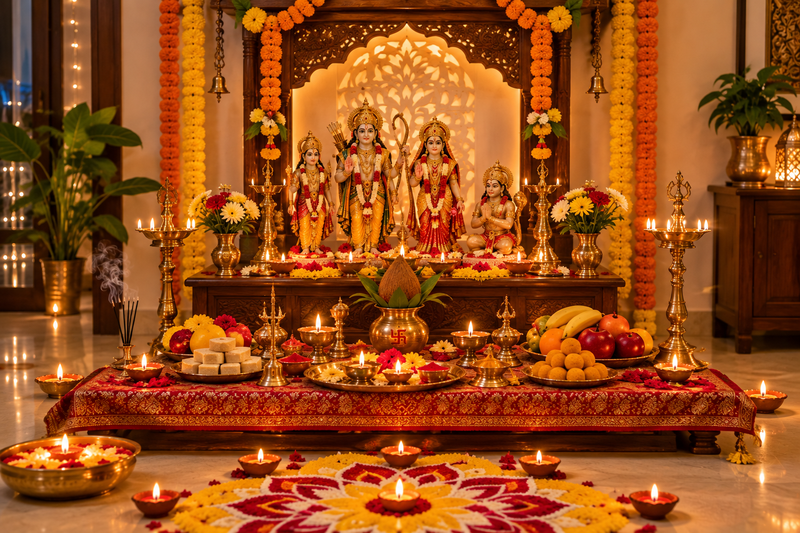
Start with three places that matter most to your celebration: the entrance, the gathering area and, if your family uses one, the puja space. Give each a clear purpose. The entrance welcomes people, the gathering area needs room for conversation, and the puja space needs enough uncluttered surface for your own observances. This approach works in a small flat as well as a larger house.
Choose a palette from what you already own
Lay out your usable cloths, trays, cushions, lamps and decorations before shopping. Select two main colours and one material to repeat. Cream with orange flowers and brass, deep blue with warm lights, or green with a familiar festive textile can all work. These are design choices, not required Diwali colours or promises of good fortune.
Repeating a small detail makes separate rooms feel connected. A narrow orange ribbon on the entrance hanging can echo flowers on the dining table. If your furniture already has strong colours, let the lighting and one quieter textile do most of the work. Keep a photograph of your chosen items on your phone so extra purchases fit the plan.
Give each area one main feature
| Area | Main feature | What to leave clear |
|---|---|---|
| Entrance | A toran or a small rangoli beside the door | The door swing, threshold and walking route |
| Living area | One lighted corner or a low floral arrangement | Seats, charging points and space for bags |
| Puja area | A clean cloth and neatly arranged items used by your household | Access to offerings and a stable place for any flame |
| Dining area | A short runner and a compact centrepiece | Serving space, glasses and sightlines across the table |
| Balcony | A secured lantern or suitable electric lighting | Doors, railings and routes people need to use |
Make the entrance easy to use
Stand outside with the door open and imagine carrying a food box, helping a child or greeting someone with limited mobility. Put the display where it can be admired without stepping over it. A small off-centre rangoli often works better than a large design across the only entrance. In a shared corridor, check the building's rules and keep communal access open.
Hang a toran securely and check that it does not catch on the door. A reusable fabric hanging can be paired with a modest amount of fresh flowers. Avoid placing loose petals on a polished walking surface. If there is no suitable floor space, use a stable decorative board or a tabletop arrangement away from the route through the room.
Layer the light without covering every wall
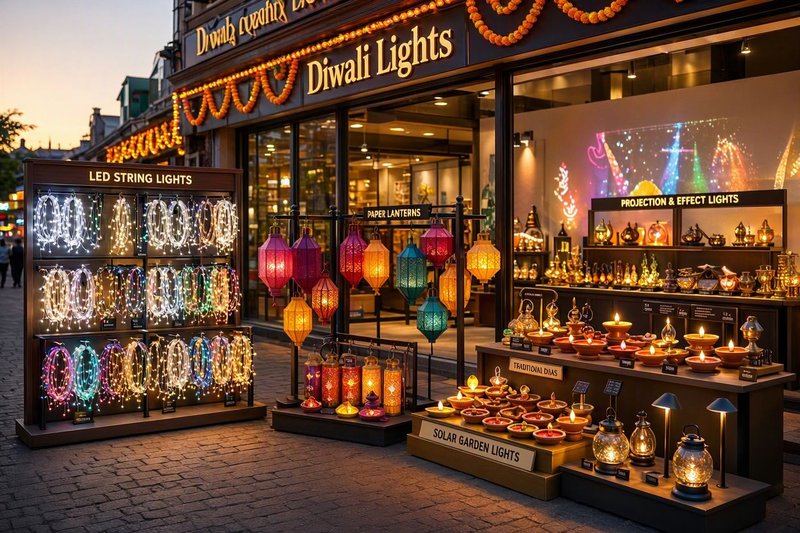
Choose one background light source and one focal display. For example, a warm string light along a suitable interior feature can support a cluster of battery diyas on a side table. Test the complete arrangement in the evening before guests arrive. Check that faces are visible, that steps are easy to see and that the light does not shine directly into someone's eyes.
Follow the product instructions for electrical lighting, including whether it is intended for indoor or outdoor use. Inspect it before decorating and arrange cables where people will not walk over them. Do not drape lights over a fabric arrangement simply because a photograph looks attractive; the product's intended use should guide the installation.
Where you use real flames, keep the display simple. The U.S. Fire Administration's candle guidance recommends stable holders, distance from combustible materials and extinguishing flames before leaving or sleeping. Apply those precautions to the setting around a diya as well. Battery lights suit unattended displays and busy entrances.
Decorate a small home with height and restraint
Use the upper part of a wall, an existing shelf or a secure doorway hanging for visual interest, while keeping everyday surfaces available. A single decorated corner can become the place for family photographs. Keep chairs usable rather than covering them with large cushions that guests must remove. If the room has several functions, choose a display you can lift away in one tray.
For a rented home, test only removable fixings approved for the surface and avoid attaching anything to electrical fittings. A cloth over a stable console and a small reusable lantern may give enough festive character without wall decoration. Leave space for coats, food deliveries and shoes; these practical details help the finished room remain welcoming.
Use a three-stage setup
- Before the celebration: clean the selected areas, test lights and arrange reusable pieces.
- Near the event: add flowers and rangoli, set out serving items and check the entrance again.
- After guests leave: extinguish flames, switch off suitable lighting and separate decorations for reuse, recycling or disposal according to local arrangements.
Keep the shopping list specific: replacement bulbs if appropriate, one length of hanging, or flowers for the chosen containers. Set a spending limit before browsing. A coherent home is easier to enjoy than an unfinished plan spread across every room. For a smaller budget, finish the entrance and gathering area first, then add another detail only if time and space allow.
Frequently asked questions
How do I decorate a small flat for Diwali?
Choose one entrance detail and one gathering-area display. Keep walking routes, seating and serving surfaces open, and use a compact arrangement that can be moved easily.
Which colours should I use?
Choose colours that work with your existing home and festive items. There is no single compulsory Diwali palette; repeating two main colours usually creates a cohesive result.
Can I decorate without real diyas?
Yes. Battery diyas and suitable electric lights can provide a festive display, especially where open flames are unsuitable or decorations will be unattended.
Sources & further reading
Calendar and event information checked 5 November 2026. Recheck local arrangements before attending.