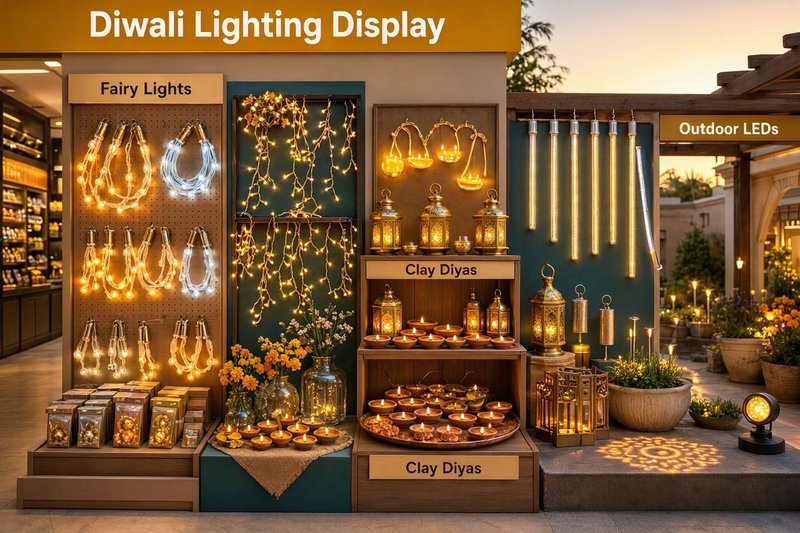
At a glance
- Choose a small display that can be supervised comfortably.
- Keep lamps stable and clear of cloth, paper and loose decoration.
- Use battery lighting where people move frequently or flames cannot be watched.
A diya display can be small and still feel special. One carefully arranged area may serve your home better than a long line of lamps across several rooms. If lighting a lamp is part of your household's puja, follow that tradition while giving the flame a stable, clear setting. Decorative lighting elsewhere can be adapted to the space and the people using it.
Decide what each light is for
Separate a devotional lamp, if used, from decorative displays and from the ordinary light needed to see steps or prepare food. A diya is not a substitute for adequate room lighting. Your decorative plan should remain easy to enjoy if you decide to use fewer flames or to extinguish them before guests leave.
Walk through the home in the evening and identify the places where a small cluster would be visible from a comfortable distance. Choose a location away from curtains, paper hangings, loose clothing and items people will reach across. Keep entrances and routes between rooms clear; they are usually better suited to battery lighting than exposed flames.
Compare the options by use
| Light | Possible use | What to plan |
|---|---|---|
| Clay or metal diya with a flame | A supervised puja or a small focal arrangement | A suitable holder or tray, stable surface and a responsible adult present |
| A purpose-made candle holder | A supervised decorative setting where permitted | Use according to its instructions; keep the flame clear of decoration |
| Battery diya | Busy entrances, displays near children or pets, and areas without open flames | Check the product, battery cover and intended use |
| Suitable electric lights | Background illumination or a secured decorative feature | Follow indoor/outdoor ratings and installation instructions |
Choose products made for their intended purpose. A decorative glass, improvised paper holder or unstable stack of trays should not become a flame container simply because it matches the room. For reusable lamps, inspect them before use and set aside damaged items. Follow the maker's instructions for suitable fuel, filling and handling rather than experimenting with substitutes.
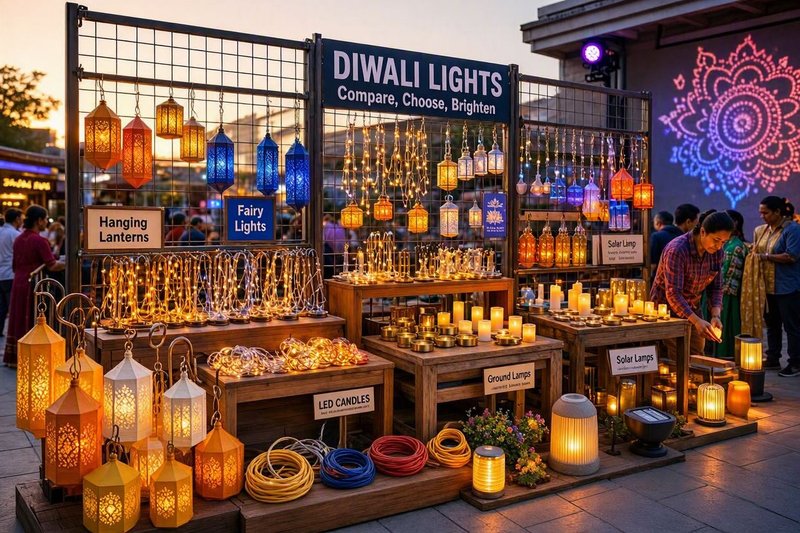
Arrange a small, readable display
Start with a non-combustible, stable setting appropriate for the lamp. Place the diya so it cannot wobble and so the holder does not sit at the edge of a table. View the arrangement from the seats guests will use. Several lamps crowded together are harder to reach and supervise than a modest arrangement with clear space around each one.
Keep the floral or rangoli element beside the flame area rather than enclosing a flame in petals or paper. A separate decorative ring of battery diyas can provide repetition without requiring flames throughout the design. If your household has a customary number or position of lamps, discuss a workable arrangement with the person leading the observance; do not treat a design suggestion as a religious requirement.
Apply clear flame precautions
The U.S. Fire Administration's candle guidance advises keeping candles at least 12 inches, about 30 centimetres, from things that can burn, using stable holders and extinguishing them when leaving the room or going to bed. These open-flame principles are useful when planning the space around a diya. Allow more room if the setting or product requires it.
Assign supervision explicitly. Saying that everyone will watch the lamps can mean no one is responsible when the meal begins. Choose an adult who knows which lamps are lit and who will extinguish them before the household moves to another room or goes out. If supervision becomes inconvenient, change to a battery display rather than trying to keep every flame going.
Do not make a child's role depend on handling a lit lamp. Children can choose the layout, place unlit decorative items or switch on suitable battery lights with supervision. Keep lamps and battery products out of reach as appropriate to the child's age and the manufacturer's instructions. Make the same space for a pet's ordinary route through the room.
Use a simple lighting sequence
- Prepare while the area is calm. Finish nearby decoration, clear packaging and check the holders.
- Confirm the route. Make sure guests can sit down, move through the room and reach food without passing over flames.
- Light only the planned supervised lamps. Keep the rest of the decorative arrangement ready to use without a flame.
- Recheck when the activity changes. Meals, photographs, children playing and visitors arriving can change how people use the room.
- Close the display deliberately. Extinguish flames before leaving the area, allow items to cool and store them only when appropriate.
Adapt balconies and shared spaces
A balcony may look sheltered until a door opens or the wind changes. If the location is exposed, crowded or outside your direct supervision, choose lighting designed for that setting instead of open diyas. Follow building rules for common corridors, workplaces and event spaces. A tradition at home does not automatically make an open flame suitable for every venue.
After the festival, record what worked: how many lamps were comfortable to manage, where people naturally stood and which display was most visible. Clean and store reusable pieces according to their material and instructions. A practical plan that can be repeated is more useful than a larger display that depends on constant last-minute attention.
Frequently asked questions
How many diyas should I arrange?
Follow your household custom if it specifies a number, and adapt the decorative display to the available supervised space. There is no single design count suitable for every home.
Are battery diyas appropriate for decoration?
Yes. They are useful for busy routes and places where open flames are unsuitable. A devotional lamp, where part of your practice, can have a separate supervised setting.
Can I leave diyas burning while I visit neighbours?
Extinguish open flames before leaving the room or home. Use suitable battery lights if you want a decorative display while the area is unattended.
Sources & further reading
Calendar and event information checked 5 November 2026. Recheck local arrangements before attending.