At a glance
- Naraka Chaturdashi can be a major Deepavali morning observance.
- Use family context to understand names such as Choti Diwali and Kali Chaudas.
- Keep bathing traditions comfortable and free of unsupported medical claims.
Why the names need context
Naraka Chaturdashi is associated with the fourteenth lunar day in the festival period. In parts of North India it is commonly discussed alongside Choti Diwali, or “small Diwali.” In several southern and western traditions, its early-morning observance carries much greater prominence than that English translation might suggest.
Calling it only “the day before Diwali” can therefore be misleading. Lunar boundaries and local rules may place observances differently within civil dates, and the most important celebration for a family may happen that morning. Ask which name your hosts use and what time their household actually gathers.
The Narakasura story
A widely told devotional narrative links the occasion with Krishna’s defeat of Narakasura. Satyabhama is significant in several versions, although the details and emphasis differ. The story is remembered as the ending of oppressive power and the welcome of light and renewal.
Goa’s Narkasur effigies provide a particularly visible expression of this tradition. Communities make figures and traditionally burn them before dawn. Incredible India’s Goa guide describes the mythology and the local custom while noting that event timings vary. A public effigy celebration is one regional form, not a requirement for a home observance.
Abhyang Snan: a family ritual of preparation
Abhyang Snan commonly refers in this context to a traditional oil bath or oil application followed by bathing. In families that practise it, an early start, fragrant oil or a familiar bathing preparation, clean clothes and greetings may make the morning feel distinct from an ordinary day.
Follow the household’s customary method and use products suitable for the person involved. “Natural” does not mean every preparation suits every skin type. Keep the floor dry, check water temperature and help children or older relatives as needed. The ritual can be described as devotional and cultural care without claiming that it detoxifies the body or prevents illness.
If a family member cannot manage an early bath or a particular product, discuss a comfortable adjustment. The festival should not become a test of endurance. Avoid moving from an oil application directly to handling a flame; finish bathing, dry off and change before joining activities around diyas.
Several regional rhythms
| Context | Practices often highlighted | What to ask before visiting |
|---|---|---|
| Maharashtrian families | Early bathing, faral and a wider sequence of family observances. | When does the morning gathering or breakfast begin? |
| Many Tamil and Kannada households | Deepavali morning, oil bath, clothes, sweets and greetings. | Which morning customs does this household follow? |
| Parts of North India | Choti Diwali lamps, a smaller gathering and preparations for the main night. | Is prayer planned or is this mainly preparation time? |
| Goan communities | Narkasur effigies and overnight public celebrations in some localities. | What does the current local programme announce? |
These are useful starting points, not boundaries around what a family may do. Migration, interregional households and local devotional traditions create many combinations. Let relatives describe their own practice instead of correcting them with a generic internet schedule.
Choti Diwali, Kali Chaudas and Kali Puja
Kali Chaudas is another name encountered in parts of western India, with its own regional devotional associations. Bengali Kali Puja is a distinct goddess-centred observance around the new-moon night. Similar names do not establish that the rituals, dates and meanings are identical.
When inviting guests, write the name used by your household and explain the activity: an early bath and breakfast, an evening prayer, or a visit to a particular community celebration. That short description is more useful than assuming everyone interprets “Choti Diwali” in the same way.
A manageable home celebration
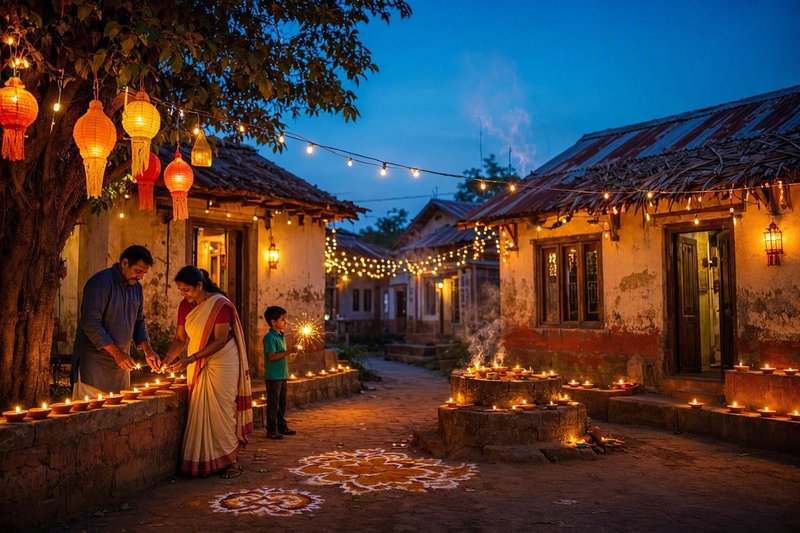
Prepare clothes and bathing items the previous evening if an early morning is customary. Keep breakfast or snacks simple enough that the cook can take part. A familiar prayer, one supervised lamp, shared food and greetings can make a complete family gathering without a long programme.
If your household uses Choti Diwali mainly for preparation, finish the jobs that make the following gathering easier: check serving dishes, arrange the prayer space, make a small rangoli and confirm visits. Leave some time without tasks. A quieter celebration can have its own atmosphere rather than becoming only a deadline for the next day.
Keep light and sound considerate
Fireworks are optional. A home can mark the occasion through lamps, food, storytelling or a visit without them. If a local celebration uses fireworks, check the current rules and think about children, neighbours and animals when deciding where to stand or when to return home.
For the broader sequence, see the five days of Diwali. The faral guide explores the snacks associated with many Maharashtrian celebrations, while Diwali stories separates the Narakasura narrative from other Krishna traditions.
Frequently asked questions
Are Choti Diwali and Naraka Chaturdashi always identical?
They overlap in common usage, but regional emphasis and calendar treatment differ. Use the name and date followed by the household or community you are joining.
Is Abhyang Snan a medical treatment?
In this festival context it is a traditional bathing observance. It should not be promoted as a detox, cure or substitute for healthcare.
Is Kali Chaudas the same as Bengali Kali Puja?
They are distinct regional observances despite the similar names. Check the specific tradition rather than treating one as an alternative spelling of the other.
Do we need fireworks for a Choti Diwali celebration?
No. Lamps, prayer, food, storytelling and family time can mark the occasion without fireworks.
Sources & further reading
Calendar and event information checked 5 November 2026. Recheck local arrangements before attending.