At a glance
- Regional descriptions are starting points, not rules for every household.
- Morning customs, new-year observances and goddess traditions change the festival’s rhythm.
- Name the actual community and observance when describing a celebration.
Compare what people do, not which version is authentic
Diwali is widely recognised across India, but its customs do not form one uniform national script. Language, region, religious community, family history and migration all shape how it is observed. Even neighbouring households may choose different prayers, meals or visiting patterns.
A useful comparison asks concrete questions: Which occasion is central? What story is remembered? Does the gathering begin before dawn or after sunset? What food is prepared? Who visits whom? This makes regional differences understandable without implying that one place celebrates the “real” festival and another follows a variation of lesser value.
A regional overview
| Region or context | Prominent traditions in many families | Keep in mind |
|---|---|---|
| North India | Rama-Ayodhya narratives, Lakshmi-Ganesha puja, lights, sweets and visiting. | Local and family devotional practices remain diverse. |
| Gujarat | Chopda Puja, Gujarati New Year, greetings, temple visits and Annakut. | Business customs and the new-year observance are related but distinct. |
| Maharashtra | Vasu Baras, Naraka Chaturdashi, Abhyang Snan, faral, Padwa and Bhau Beej. | The wider season can extend beyond a simple five-day graphic. |
| Goa | Narkasur effigies in participating communities, alongside home celebrations. | Public programmes differ between localities. |
| Tamil Nadu and Karnataka | Early Deepavali bathing, clothes, sweets and Naraka Chaturdashi traditions. | Do not assume every celebration centres on the same evening. |
| West Bengal and some eastern communities | Kali Puja, neighbourhood worship and its associated offerings. | Kali Puja has a distinct Shakta context. |
| Sikh communities, especially visible in Punjab | Bandi Chhor Divas, gurdwara gatherings and illumination. | The commemoration has its own religious history. |
North India: homecoming, household worship and public light
Rama’s return to Ayodhya is an important association for many northern families. Home worship, lighting, rangoli, sweets and visits can accompany that narrative, while local temples and markets provide a public setting for the season. A city’s illuminated streets and a family’s private puja serve different purposes, even when both appear in the same travel photograph.
Delhi, Rajasthan, Uttar Pradesh and neighbouring regions contain many communities and local practices. Rather than borrowing a complete routine from a city guide, ask hosts which parts they actually follow. Current event schedules belong in a separate planning check; they cannot be inferred from a general description of regional tradition.
Gujarat and Maharashtra: an extended family calendar
Gujarati New Year greetings, temple visits and business traditions give the period after Diwali a distinctive sense of renewal. Chopda Puja relates to account-book worship in some business households, while Bestu Varas brings a wider round of family and community visits.
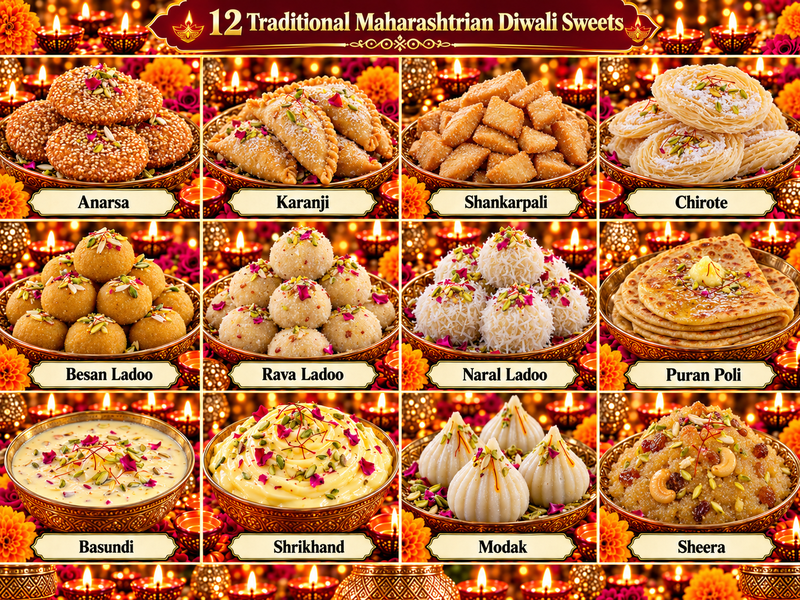
Many Maharashtrian families recognise a longer sequence including Vasu Baras, early Naraka Chaturdashi customs, Padwa and Bhau Beej. Faral, the festive selection of savoury and sweet snacks, can be an important part of hospitality. In both settings, a visitor benefits from asking about the full family calendar rather than assuming the main evening is the only gathering.
Southern mornings and Goa’s Narkasur tradition
In many Tamil and Kannada households, the early start is essential to the atmosphere of Deepavali: bathing, clothes, food and greetings mark the morning. These customs are not evidence that every southern family follows an identical routine. Andhra, Telangana, Kerala and other local contexts add further family and community differences.
Goa’s effigy tradition makes the Narakasura narrative highly visible in some neighbourhoods. Incredible India connects it with the Krishna and Satyabhama story and notes local variations in the public programme. Attend only after checking the current arrangements, and leave practical supervision of fire displays to the organisers.
Bengal and eastern India: understand the goddess tradition
Kali Puja can be central to the new-moon night for Bengali Shakta families and participating communities. It has its own images, devotional meanings and ritual setting. It should not be introduced merely as a regional name for Lakshmi Puja.
Other eastern households may foreground different forms of worship or family remembrance. A state label alone does not tell you what a host will offer or which ritual they will perform. The government tourism Kali Puja overview is useful for cultural background, while local announcements are needed for current visits.
Religious communities cross regional boundaries
Jain Diwali commemorates Mahavira’s nirvana, while Sikh Bandi Chhor Divas remembers Guru Hargobind’s liberation and the release of fellow prisoners. These traditions are not confined to a single state and should not disappear inside a map of predominantly Hindu regional customs. The faith traditions guide treats them in their own terms.
Nepal’s Tihar and Newar Swanti are also important to the wider South Asian season, but Nepal should be described as its own cultural and national setting rather than an Indian region. Diaspora families may bring several of these traditions together in one home.
How to learn from a family’s own celebration
Ask a few open questions: What is the first thing you do? Which food would you miss if it were absent? Who taught you the prayer? Has the celebration changed since moving here? Those answers reveal more than a list of decorative differences.
When sharing photographs or writing captions, name the actual observance and location if known. A dawn Deepavali gathering, an Annakut offering and a Kali Puja pandal each deserve an accurate description. Let regional guides open the conversation, and let the people celebrating supply its detail.
Frequently asked questions
Does every region follow the same five-day Diwali sequence?
No. Some families observe an extended season, others focus on particular mornings or evenings, and names and calendar conventions vary.
Is Deepavali only a South Indian name?
Deepavali is especially common in several southern languages, but both Diwali and Deepavali are used more widely. A name alone does not identify every ritual a family follows.
Can a family combine traditions from different regions?
Yes. Interregional and diaspora households often choose practices from more than one family background. Describe the combination as that household’s experience.
How should a visitor prepare for an unfamiliar regional celebration?
Ask about the main gathering time, worship arrangements, food preferences and guest etiquette. Check public event details separately with current local sources.
Sources & further reading
Calendar and event information checked 5 November 2026. Recheck local arrangements before attending.