At a glance
- Use definitions as an introduction to living traditions.
- Regional names can carry distinct meanings and practices.
- A calendar term needs a date and location when used for timing.
These terms help you follow Diwali articles, invitations and family conversations. Definitions are introductions; the precise use of a word can vary with language, region and tradition. Ask the people keeping a custom how they understand it.
Lamps, worship, food and the festival calendar
- Deepavali
- A festival name associated with a row of lamps. Diwali is a widely used form of the name; families and languages have their own preferred usage.
- Diya
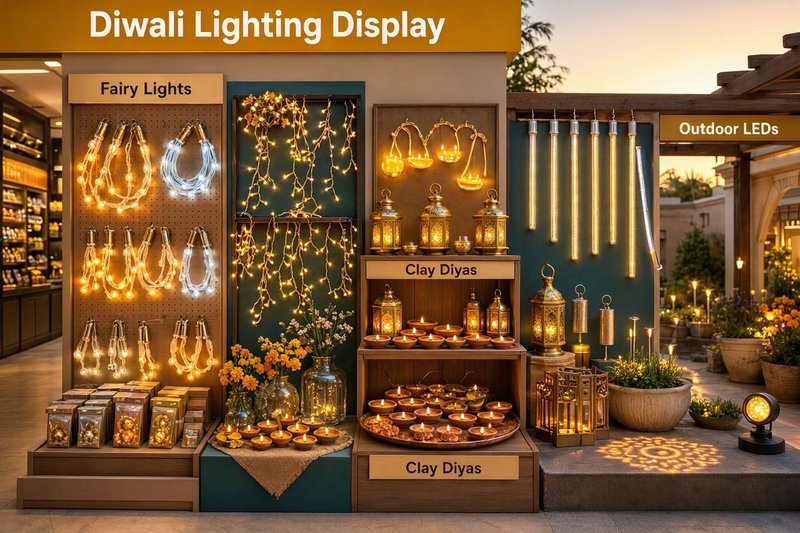
- A small lamp, often made of clay or metal. In many households its light expresses welcome, hope and devotion.
- Puja
- An act of worship. The prayers, offerings and sequence depend on the deity, tradition, household and occasion.
- Aarti
- A devotional offering involving light, often accompanied by song or prayer. Follow the setting’s guidance when participating or observing.
- Prasad
- Food or another offering shared after being offered in worship. Ingredients and household practices vary.
- Naivedya
- Food presented as an offering during worship. The foods chosen follow the particular tradition and occasion.
- Samagri
- The materials gathered for a ritual. A samagri list is most useful when it matches the actual prayer your household intends to perform.
- Thali
- A plate or tray. In a puja context it holds selected ritual items; in a meal it can refer to a serving arrangement.
- Kalash
- A vessel used in many Hindu rituals. Its preparation and role depend on the specific worship tradition.
- Tilak
- A mark applied to the forehead in many religious and family observances. Materials and patterns vary.
- Lakshmi
- A Hindu goddess associated with prosperity, auspiciousness and wellbeing, worshipped by many families during Diwali.
- Ganesha
- A Hindu deity associated with wisdom and the removal of obstacles. Many households invoke Ganesha alongside Lakshmi at Diwali.
- Dhanvantari
- A deity associated with Ayurveda and healing in Hindu tradition, remembered by some families at Dhanteras.
- Dhanteras
- An observance near the beginning of the Diwali season, associated in many households with prayer, wellbeing and customary purchases.
- Naraka Chaturdashi
- An observance associated in several regional traditions with the defeat of Narakasura. Morning customs and local calendars differ.
- Choti Diwali
- A commonly used name for an observance around the time before the main Diwali night, particularly in northern India. Its local use needs context.
- Abhyang Snan
- A traditional oil-bath observance associated with Deepavali in some communities. It is a cultural practice, not a promise of medical benefit.
- Kali Puja
- Worship of Kali, especially prominent in Bengal and some eastern traditions around the new-moon night of the Diwali season.
- Govardhan Puja
- An observance associated with Krishna and the Govardhan narrative, with practices that vary by community.
- Annakut
- Literally associated with a mountain or abundance of food; the term describes a devotional arrangement of food offerings in relevant traditions.
- Bali Pratipada
- An observance associated with King Bali in some regional traditions. It should not be assumed to have the same story as Govardhan Puja.
- Bestu Varas
- A name used for the Gujarati New Year. The occasion brings greetings, visits and renewal in relevant communities.
- Chopda Puja
- A customary worship of account books in some business communities, expressing aspirations for honest work and a prosperous new period.
- Bhai Dooj / Bhai Beej
- Names for a sibling observance in the festival season. Family rituals often involve a tilak, good wishes and a shared visit or meal.
- Rangoli
- Decorative floor art, often made at entrances or gathering spaces. Designs and materials vary across regions.
- Kolam
- A southern Indian floor-drawing tradition with its own designs and practices. It should not be treated merely as another word for every type of rangoli.
- Toran
- A decorative hanging for an entrance, often using leaves, flowers, fabric or reusable craft materials.
- Kandil
- A lantern associated with festive decoration in several communities, particularly familiar in Maharashtrian Diwali settings.
- Mithai
- A broad term for sweets. Milk, flour, nuts and other ingredients produce many different regional varieties.
- Faral
- A festive assortment of sweet and savoury foods associated especially with Maharashtrian Diwali households.
- Tithi
- A lunar-calendar division. Its timing does not necessarily match a civil day running from midnight to midnight.
- Amavasya
- The new-moon phase or its associated lunar-calendar day, relevant to the timing of the main Diwali observance in many traditions.
- Purnima
- The full-moon phase or its associated lunar-calendar day. Dev Deepawali is associated with Kartik Purnima.
- Muhurat
- A selected auspicious time for an activity or observance. It requires the relevant date, place and calendar convention.
- Panchang
- A traditional calendar or almanac used to determine dates and ritual timing. Use one appropriate to the location and tradition you follow.
- Dev Deepawali
- A separate festival associated with Kartik Purnima and particularly known for the illuminated ghats of Varanasi.
- Bandi Chhor Divas
- A Sikh commemoration associated with Guru Hargobind’s release and the liberation of fellow prisoners. Its meaning is distinct from Hindu Diwali narratives.
- Tihar / Swanti
- Related Nepalese festival names with specific household and community contexts. Lamps, Lakshmi worship and sibling observances are among the season’s practices.
- Mha Puja
- A Newar observance of the self during the Swanti/Tihar season. Its community context should be retained when explaining Buddhist connections.
Use the terms with context
When explaining a custom, name the occasion and community before describing the action. “In our family’s Lakshmi Puja” is clearer than claiming that every Diwali household follows the same rule. For an unfamiliar date, consult the calendar guide; for regional practice, start with traditions across India.
Frequently asked questions
Do Diwali terms have the same meaning in every household?
Some have broad shared meanings, but their use and the practices around them can vary. Context matters, especially for regional names and ritual procedures.
Is a glossary enough to follow a ritual?
A glossary explains words. For the actual sequence, follow the household or community whose tradition you are observing.
Sources & further reading
- Rashtriya Panchanga: Principal Festivals and Anniversaries, 2026–2027 ↗
- BAPS: 2026 festival calendar ↗
- Tihar | Nepal Tourism Board ↗
- One Festival, Many Lights: Diwali Across South Asia and the Himalayas ↗
- Sikh Celebrations: Bandi Chhor Divas ↗
Calendar and event information checked 5 November 2026. Recheck local arrangements before attending.