At a glance
- Make dress, contributions and religious participation voluntary.
- Keep the programme concise and acknowledge varied traditions.
- Assign food, facilities, access and cleanup responsibilities before the event.
Start with a clear purpose: to recognize a festival important to some colleagues and create a welcoming opportunity to learn and connect. Decide the size of the event with the team and the available time. A short gathering with a thoughtful introduction can be more comfortable than a packed programme of performances, competitions and compulsory dress.
Make participation optional
State in the invitation that colleagues are welcome to attend, observe or skip the event. Do not require traditional clothing, a performance, a food contribution or participation in worship. Avoid asking one colleague to represent every Diwali tradition simply because they celebrate it. Invite contributions, explain the task and let people choose.
If the programme includes a religious observance, describe that clearly and keep participation voluntary. Cultural explanation, shared food and informal activities can be arranged so people can join without taking part in worship. Do not make colleagues disclose their beliefs or explain why they prefer a different level of involvement.
Explain the occasion without flattening its traditions
Use a short, accurate introduction that acknowledges regional and religious differences. Many Hindu households celebrate Diwali or Deepavali through lamps, worship, food and family traditions; Jain Diwali and Sikh Bandi Chhor Divas have distinct meanings. Avoid presenting one story or one puja as the explanation for every colleague's observance. Link to a fuller cultural guide for anyone who wants to learn more.
Ask speakers to describe their own experience in that spirit: “In my family…” is often a useful starting point. A small display can identify who contributed a photograph or craft and why it matters to them. Obtain permission before using personal images, recording a performance or sharing event photographs beyond the participants.

Use a short programme with space between activities
This optional 60-minute example can be adjusted to the workplace. It is a planning model, not an event requirement.
| Part | Example duration | Purpose |
|---|---|---|
| Welcome and brief introduction | 5 minutes | Explain the event and choices for participation |
| Voluntary story or cultural contribution | 10 minutes | Share a personal perspective with context |
| Shared food and conversation | 25 minutes | Give colleagues time to connect without a performance task |
| Optional craft or small group activity | 15 minutes | Offer something easy to join or observe |
| Thanks and practical close | 5 minutes | Acknowledge helpers and explain cleanup |
Choose activities people can enter easily
A tabletop pattern activity, a display of voluntary family stories or a simple collaborative decoration can involve people with different levels of knowledge. Provide materials and instructions in advance, and offer a seated option. If the team enjoys a friendly showcase, recognize explanation and teamwork rather than only appearance or costume.
Avoid quizzes that put people on the spot about religion or assume that one answer describes every region. A reading corner or a short discussion prompt may work better. Keep the sound level comfortable for conversation and provide a quieter place to step away. Ask about access requirements through the workplace's usual process rather than guessing what participants need.
Give food a coordinator
Use one person to collect dish names, ingredients, relevant allergen information and storage needs. For a potluck, agree contributions rather than assuming everyone can cook or pay for a dish. Offer another way to participate. Do not label the whole meal vegetarian, vegan or suitable for a particular restriction unless the individual dishes and arrangements support the statement.
Plan the serving area, utensils and storage before the food arrives. The World Health Organization's Five Keys to Safer Food provide a useful baseline for clean handling, cooking and appropriate temperatures. Milk sweets also need product-specific instructions; the FSSAI guidance on traditional milk products is a useful reference when choosing and storing them.
Keep decoration suitable for the building
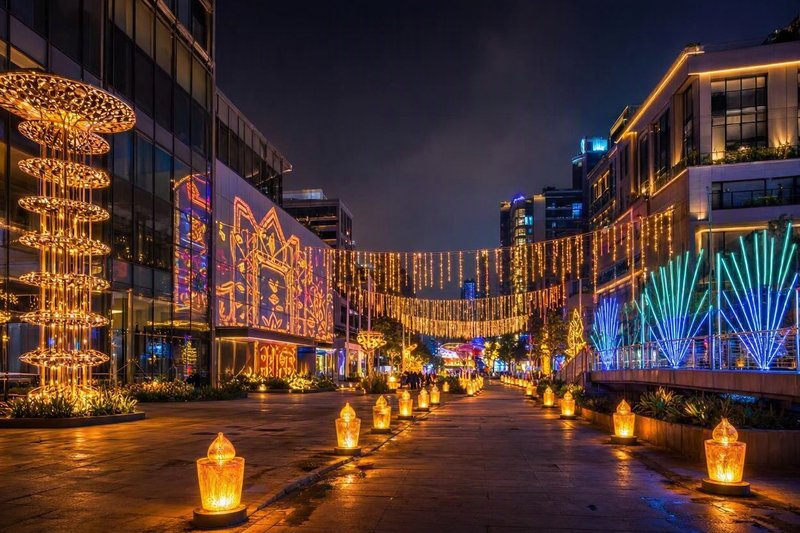
Use battery diyas and approved electric decoration as the starting point. Check facilities requirements before fixing hangings or installing lights, and leave exits, access routes and equipment clear. Avoid turning a floor rangoli into a barrier in a busy passage. An off-route board or display area can offer the same creative opportunity.
If any open flame is proposed, obtain the venue's permission and follow its requirements. Official candle precautions emphasize stable holders, clearance and supervision. In a workplace where people may leave for calls or meetings, choosing a flame-free display simplifies the plan.
Include colleagues beyond the main room
Check shift patterns and remote participation before setting the programme. A concise written introduction, a voluntary message board and photographs shared with permission can help colleagues who cannot attend. Avoid expecting remote teammates to watch a long video stream while everyone else eats. If gifts or refreshments are part of the event, decide how eligible colleagues in other locations will be included.
Keep corporate gifting within the organization's approved process. Separate the event budget from any client-gift decisions, and do not turn a celebration into a requirement for employees to promote the company on personal accounts. A sincere internal thank-you is enough.
Assign the finish as well as the setup
Give clear ownership for invitations, facilities, food, access needs, photography and cleanup. Decide who will return borrowed items and how leftover food will be handled according to its requirements. After the event, ask one or two simple questions about what people enjoyed and what would make participation easier. Use the answers to improve next year's gathering without automatically making it larger.
Frequently asked questions
Should a Diwali dress code be compulsory?
Make festive clothing optional and explain that ordinary work clothes are welcome. Participation should not depend on buying an outfit or representing a particular culture.
How can remote colleagues be included?
Offer a concise introduction, a voluntary contribution board and an appropriate way to receive any workplace gift or benefit. Ask what format is useful instead of assuming a long livestream will help.
What is a suitable office diya display?
Battery diyas and approved electric lights are practical starting points. Check building requirements for any installation or proposed open flame and keep access routes clear.
Sources & further reading
- World Health Organization: five keys to safer food ↗
- Guidance Note on Traditional Milk Products ↗
- Candle Fire Safety | U.S. Fire Administration ↗
Calendar and event information checked 5 November 2026. Recheck local arrangements before attending.