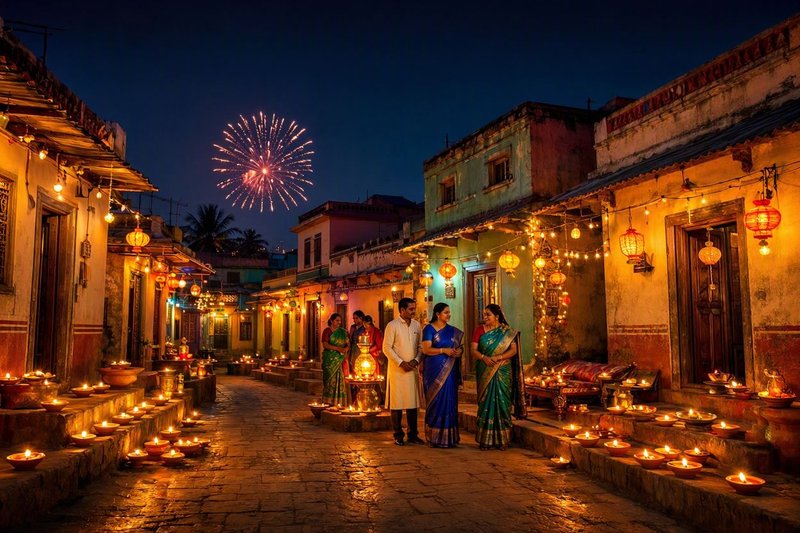
At a glance
- Choose the outfit for the activities and setting of your celebration.
- Rewear a comfortable favourite and use one focal detail.
- Check movement, footwear and loose fabric before the event.
Look at the invitation and your own plans before choosing a style. A home gathering, a temple visit, a formal dinner and an office event can call for different levels of formality. Ask the host if you are unsure about the setting. There is no single outfit or colour that everyone must wear for Diwali, and buying something new is optional.
Plan around movement and time
Think through the activities rather than selecting only for a photograph. Will you sit on the floor, climb stairs, stand for a long time or travel between homes? Will you be helping serve food? Try the outfit with those movements. Adjust a hem, sleeve or fastening before the day instead of expecting to manage it continually during the celebration.
| Setting | Useful direction | Check before leaving |
|---|---|---|
| Family celebration at home | A familiar saree, suit, kurta set or other festive outfit you enjoy | Comfort when sitting, moving and helping |
| Temple or devotional gathering | Clothing that meets the venue's guidance and your practice | Any specific dress expectations and footwear arrangements |
| Workplace event | A festive detail within the workplace's usual requirements | Whether dress is optional and what the programme involves |
| A longer evening visit | An outfit suited to the climate with an appropriate layer | Walking, transport and how the layer fits |
| A child's celebration | A comfortable outfit with manageable closures and accessories | Freedom to sit, play and use the bathroom comfortably |
These are starting points, not gender rules. Choose the clothing and expression that suit you. A regional garment or a family heirloom can carry personal meaning, while a simple modern outfit can be equally appropriate when it fits the occasion.
Build the look from one focal piece
Pick the item you most want to wear: a saree, jacket, kurta, dupatta, pair of earrings or embroidered bag. Let the other pieces support it. A richly patterned garment may need only one accessory, while a plain outfit can take a stronger necklace or a colourful layer. Try the complete combination rather than deciding on each item separately.
If you like bright colours, choose the combination because you enjoy it. Red, maroon, gold, green, blue and other festive shades appear in many wardrobes, but colour meanings are not uniform across families and communities. Avoid treating a shopping recommendation as a mandatory lucky colour or a guarantee attached to the festival.
Rewear with one meaningful change
Try an existing garment with a different layer, accessory or styling arrangement appropriate to its construction. A well-fitting piece that you already like is a strong starting point. Borrowing jewellery or exchanging accessories within the family can make the outfit feel different without adding another garment that will rarely be worn.
Check repairs and alterations early. Missing hooks, a loose button or an uncomfortable seam are easier to address before the celebration. Follow the garment's care instructions for cleaning and pressing. When borrowing an item, agree how it should be handled and returned; the person lending it may value its history as much as its appearance.
Test shoes, jewellery and practical details
Walk in the shoes you plan to wear, including on the surfaces you expect to encounter. Consider whether you will remove them at a home or venue. Choose something you can manage comfortably rather than introducing an unfamiliar pair for a long evening. Keep the bag small enough to carry easily while still holding the essentials you need.
Wear the jewellery for a short trial with the outfit. Check whether a necklace catches on embroidery, earrings feel heavy or bracelets interfere with serving. Choose a focal accessory and leave others out if they make the look harder to wear. For children, limit trailing or easily detached decorative pieces and follow age suitability for any accessories.
Keep fabric away from flames
Plan the outfit and the diya setting together. Secure loose sleeves, a saree pallu, dupatta or other hanging fabric so it does not move across a flame while you reach for food or an offering. Keep hair and accessories clear as well. Do not assume an outfit is suitable beside a flame simply because it is described as traditional.
The U.S. Fire Administration's candle guidance emphasizes distance from materials that can burn and clear, supervised settings. A decorative battery-light arrangement can make a busy gathering easier to manage. If an outfit restricts movement or has long trailing parts, change the arrangement or clothing before joining the activity.
Make grooming and finishing details manageable
Choose a hairstyle and makeup routine you can complete comfortably and maintain through the planned day. An elaborate last-minute experiment can make getting ready stressful. If you use mehndi or another cosmetic product, select it thoughtfully and follow the product's instructions; do not let a social-media design stand in for information about what is being applied.
Lay out the complete outfit, accessories and suitable layer together. Take a simple photograph if it helps you remember the combination. Check pockets, fastenings and whether you need a bag for removed footwear or a change for the journey. Practical preparation leaves more room to enjoy the people you are meeting.
Make coordinated family outfits optional
If the family enjoys matching, agree one shared colour or detail instead of requiring identical purchases. Let people choose the garment and level of participation that suits them. Children may prefer a comfortable favourite over a formal set, and adults may already have clothing they want to rewear. A group photograph works best when everyone can move and relax.
After the event, note which combination was comfortable and which detail needed adjustment. Store borrowed and delicate pieces appropriately. Your next festive outfit can build on something that already worked rather than beginning with another shopping list.
Frequently asked questions
Do I need a new outfit for Diwali?
No. Rewear a favourite garment, repair or alter it if needed, and add an accessory or layer you enjoy. New clothing is a choice rather than a universal requirement.
Which colour is best for Diwali?
Choose colours that suit your preferences, garment and setting. There is no one compulsory Diwali colour for every family or community.
What should children wear?
Prioritize comfort, easy closures and freedom to move. Keep trailing fabric and accessories manageable, especially around food service and any open flames.
Sources & further reading
Calendar and event information checked 5 November 2026. Recheck local arrangements before attending.