At a glance
- The page contains actual essays, a speech, and a Hindi sample.
- Add a true observation and vocabulary the student understands.
- Count the final adapted version when a teacher specifies a word limit.
Short English essay: Diwali
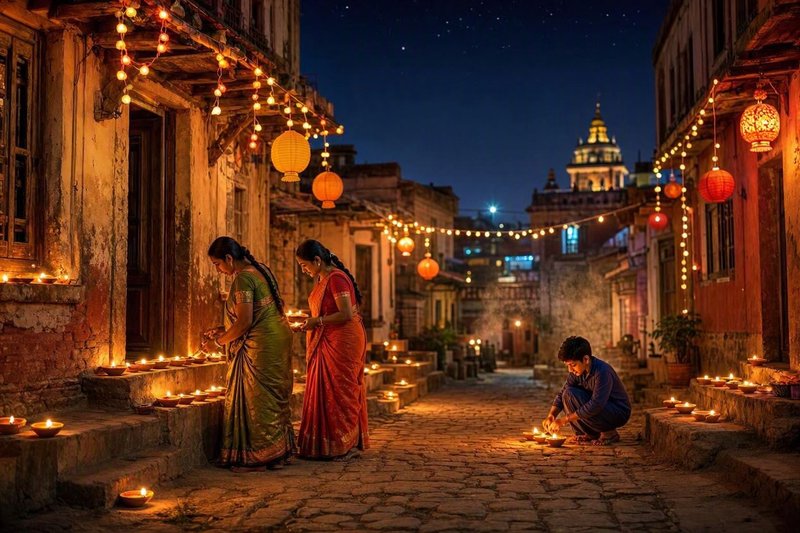
Diwali is a festival of lights celebrated by many families in India and around the world. It is also called Deepavali. Small lamps called diyas, colourful rangoli, festive meals, and visits to relatives are familiar parts of many celebrations.
People connect Diwali with different stories and traditions. In many homes, the festival is a time for prayer, gratitude, and new beginnings. Families may clean their houses, decorate an entrance, make sweets, or spend an evening together.
We can enjoy the festival thoughtfully. We can keep shared spaces clean, use decorations carefully, and consider neighbours and animals. Sharing a kind message or helping someone can be as meaningful as giving a present. Diwali reminds us to bring warmth and care into everyday life.
Longer English essay: Light, tradition and responsibility
Diwali, or Deepavali, is one of the best-known festival seasons associated with India. It is celebrated in many countries by families and communities with different customs. The name is often associated with rows of lamps, and light is a central image in many celebrations. A glowing diya can suggest welcome, hope, or the start of something new.
There is no single way to describe every Diwali household. Some families prepare for Lakshmi Puja, while others give greater importance to different religious or regional observances. Many Hindu families connect the festival with Rama’s return to Ayodhya in the Ramayana tradition. Other communities understand the season through their own histories and beliefs. Learning about these differences makes our understanding more accurate and respectful.
Preparation can be part of the enjoyment. Families may clean and organise their homes, arrange flowers, make rangoli, and cook food to share. Children might help fold a card or assemble paper decorations. Older relatives may tell stories about earlier celebrations. These ordinary activities allow traditions to pass between generations while leaving room for new ideas.
Thoughtfulness matters as much as appearance. Decorations should leave entrances and paths clear. Food can be shared with attention to allergies and individual needs. A modest celebration can be joyful without creating financial pressure. We can also consider the effects of noise, smoke, and waste on the wider community and choose activities that suit the people around us.
For me, an important lesson of Diwali is that celebration and responsibility can belong together. A beautiful evening is made by people who welcome others, share what they can, and care for their surroundings. Whether someone observes the festival religiously, joins a community event, or simply learns about it at school, Diwali offers an opportunity to think about hope, generosity, and belonging.
English assembly speech
Good morning, respected teachers and fellow students.
Today I would like to speak about Diwali, also known as Deepavali. Many of us first recognise the festival through lamps, rangoli, and sweets. Behind those familiar sights are stories, beliefs, and family customs that differ across regions and communities.
We can learn about Diwali by asking thoughtful questions. Why does a family make a particular food? Who taught them a favourite decoration? What do they hope to carry into the coming year? Listening to those answers teaches us more than assuming everyone celebrates in the same way.
We can also put the idea of light into practice. We can help someone who feels left out, thank the people who support us, and take care of shared spaces. If our class makes decorations, we can use materials carefully and work together. If we share food, we can consider everyone’s needs.
I wish a happy Diwali to everyone celebrating, and an enjoyable time of learning to our whole school. May we carry kindness beyond the festival and into our everyday choices.
Thank you.
Short Hindi sample: दीपावली
दीपावली रोशनी का त्योहार है। इसे दिवाली भी कहते हैं। इस अवसर पर कई परिवार घर की सफाई करते हैं, दीपक जलाते हैं और रंगोली बनाते हैं। लोग अपनों से मिलते हैं और मिठाइयाँ बाँटते हैं। अलग-अलग क्षेत्रों और समुदायों में इसे मनाने की परंपराएँ अलग हो सकती हैं।
यह त्योहार हमें आशा, सद्भाव और मिल-जुलकर रहने का संदेश देता है। हम अपनी खुशी में दूसरों को शामिल कर सकते हैं और जरूरत के समय उनकी मदद कर सकते हैं। सजावट करते समय सावधानी रखना और आसपास सफाई बनाए रखना भी जरूरी है। सादगी, प्रेम और जिम्मेदारी के साथ मनाई गई दीपावली सुंदर यादें दे सकती है।
Turn a sample into the student’s own work
Read the chosen piece aloud and replace any word the student cannot explain. Add one genuine observation from home, school, a community event, or a book. A student who does not celebrate Diwali can write “I learned that…” instead of inventing a personal celebration. If the assignment specifies a word limit, count the finished version after all edits; headings may or may not count depending on the teacher’s instructions.
For a speech, mark natural pauses and practise at a comfortable pace. Looking up occasionally matters more than rushing through extra sentences. Keep the opening courteous, the middle focused on a few ideas, and the ending clear.
Frequently asked questions
Can these samples be adapted for different school classes?
Yes. Younger students can use the short essay and explain a few concrete details. Older students can develop regional differences, responsibility, and personal observations in their own words.
What should I do when the teacher gives a word limit?
Count the final edited version and follow the teacher’s rule about headings. Shorten or expand complete ideas rather than adding repeated sentences.
Can a student who does not celebrate Diwali use these examples?
Yes. Write from the perspective of learning about the festival. There is no need to claim personal rituals or family experiences the student has not had.
How can I make the speech easier to deliver?
Use words the speaker understands, mark short pauses, practise aloud, and remove sentences that make the speech feel rushed.