At a glance
- Build a story from preparation, details and people.
- Ask permission and keep routes and ritual spaces clear.
- Label illustrations and festival contexts accurately.
Decide what your images should do before you begin: preserve a family memory, explain a tradition, illustrate an article or send a greeting. That purpose helps you choose the right subject and decide which moments are better enjoyed without a camera.
A nine-image festival story
| Frame | What to look for | Why it helps |
|---|---|---|
| 1. The setting | A wide view of the home, entrance or permitted public space. | Gives the story a sense of place. |
| 2. Preparation | Hands arranging flowers, folding a card or setting a table. | Shows the work behind the celebration. |
| 3. A lamp detail | A steady flame and the texture of its holder. | Creates a quiet visual pause. |
| 4. Floor art | The rangoli from above or from a clear angle. | Preserves its design before guests arrive. |
| 5. Food | A small selection with its serving plate or family recipe note. | Connects the image to a household memory. |
| 6. Worship or reflection | A permitted view that respects the participants. | Records meaning without intruding. |
| 7. People together | A conversation, shared task or relaxed portrait. | Makes the story personal. |
| 8. The wider community | A public decoration or gathering from a safe place. | Connects the household with its surroundings. |
| 9. A closing detail | A finished card, packed sweets or the evening’s final portrait. | Gives the collection a natural ending. |
Work with the light you have
For a lamp photograph, tap or meter near the flame and check the result so the flame does not become a large featureless patch. Keep the camera steady and try a few exposures. A nearby lamp or gentle room light can make faces more readable without placing people close to an open flame.
Try one wide frame and one detail before changing position. When photographing rangoli, an overhead view emphasises geometry; an angled view can include the doorway or a lamp arrangement. Stay on a stable surface and avoid standing over a design in a way that might damage it.
Keep people comfortable
Ask before photographing a person and before sharing the picture publicly. A child’s parent or guardian should be involved in that decision, and the child’s comfort matters too. Offer a choice between a portrait and an activity photograph. People often relax when they can continue a task instead of holding a long pose.
During worship, follow the household or venue’s rules. A moment can be important even if you do not record it. Avoid using flash or moving objects near a shrine without permission.
Make a useful social image
Capture both a vertical and a horizontal composition if you know the image will serve several formats. Leave clear space for a short greeting. Keep lettering large, give it strong contrast and test the final image on a small screen. Put essential words in the post’s text as well so readers do not depend on an image to receive the message.
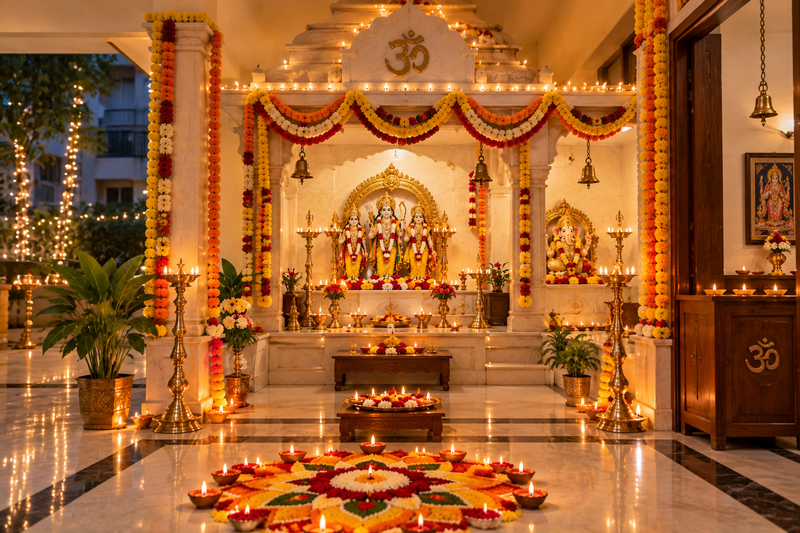
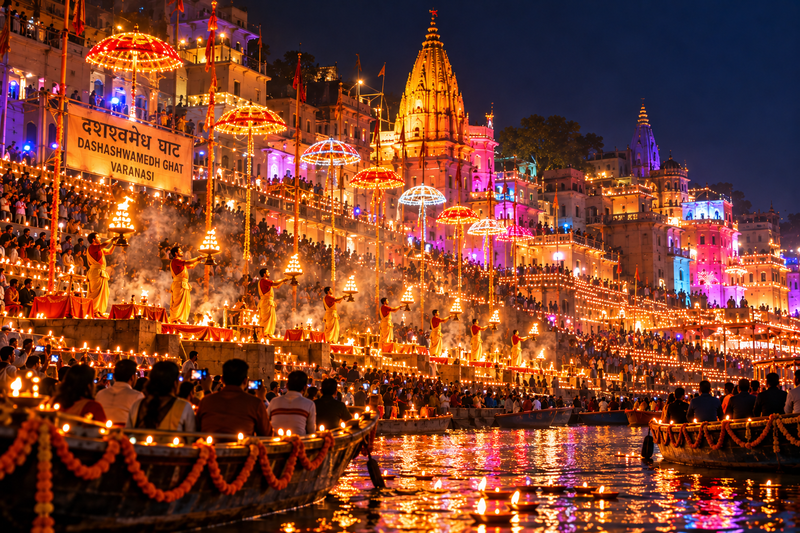
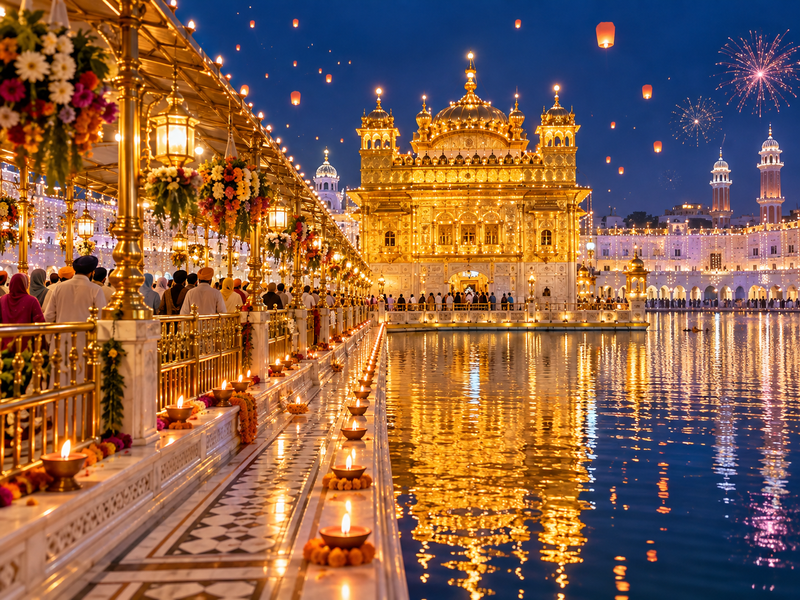
The caption collection offers concise original lines. Use an accurate description when naming a place, deity or observance. Do not label a Dev Deepawali scene as the main Diwali night, or a Sikh temple image as Lakshmi Puja.
Use festive artwork honestly
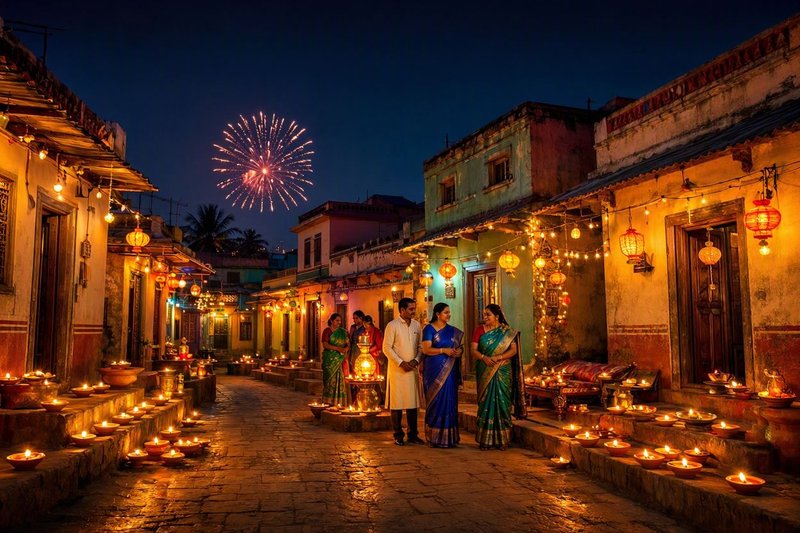
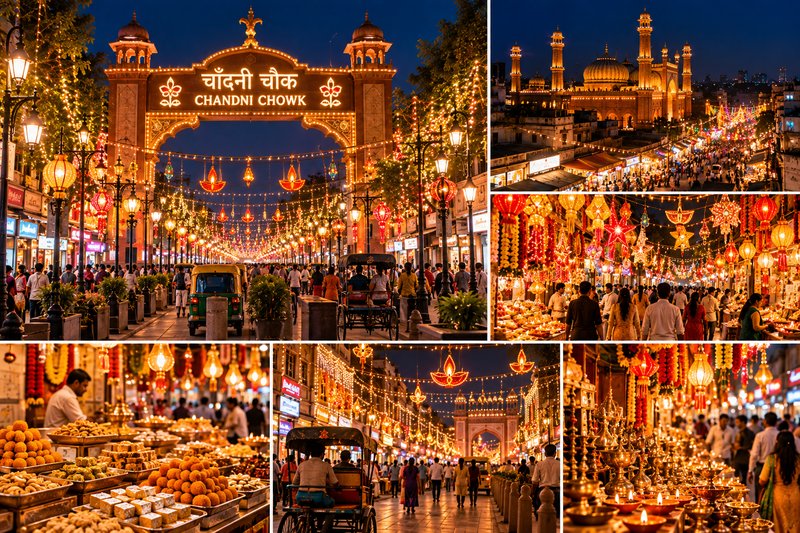
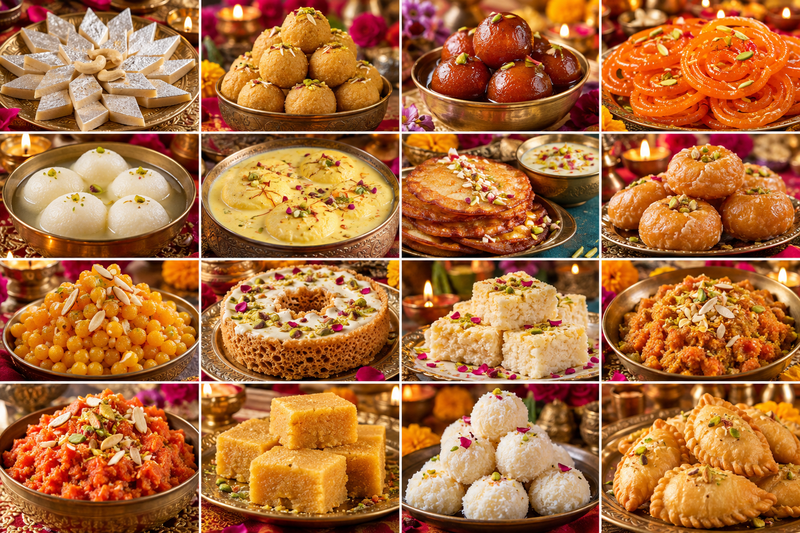
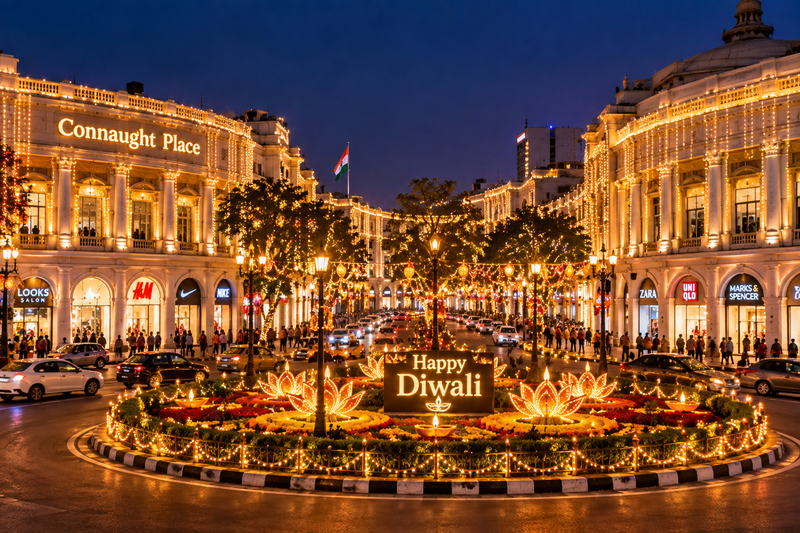
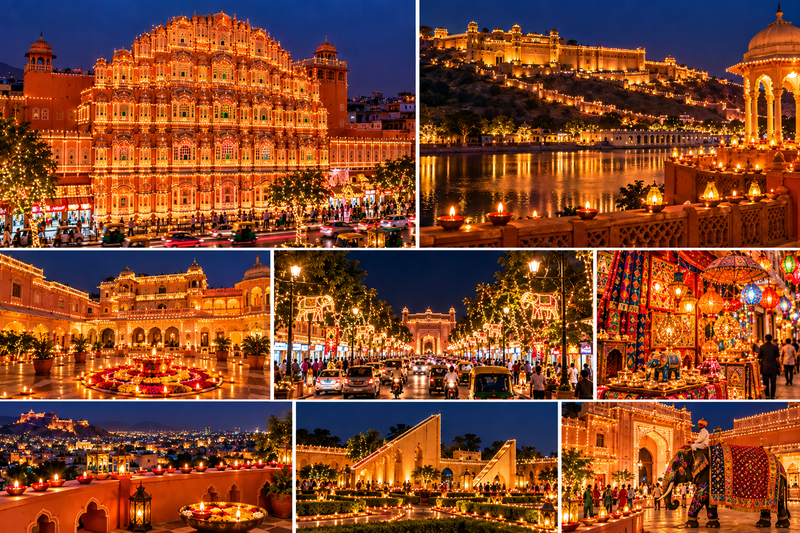
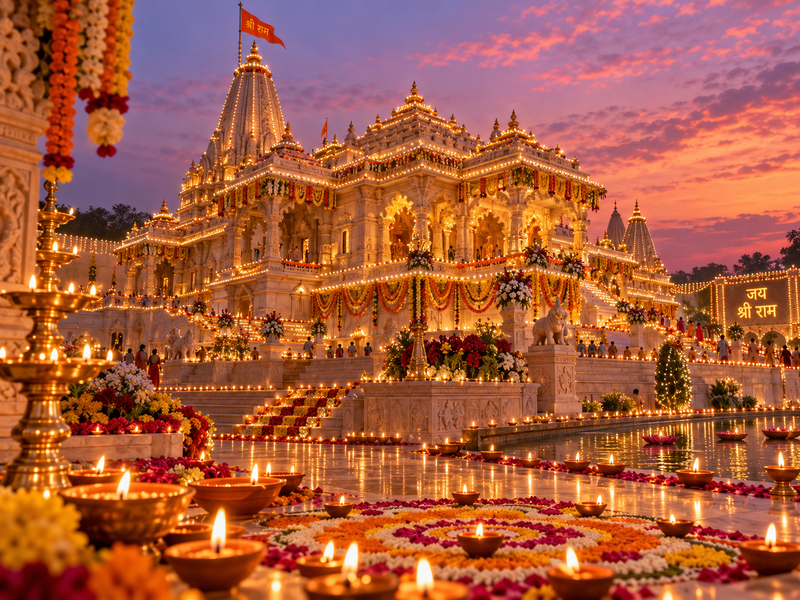
The supplied images featured in this collection are illustrative artworks, including stylised city scenes and food collages. Use them to set a mood or introduce a topic. They do not document a real event’s current decorations, a temple’s access arrangements or a tested recipe.
Choose artwork that matches the article’s subject. A general lamp scene works well when there is no exact image for a particular custom. Avoid adding a place name merely because an image looks impressive.
Write alt text and captions for different jobs
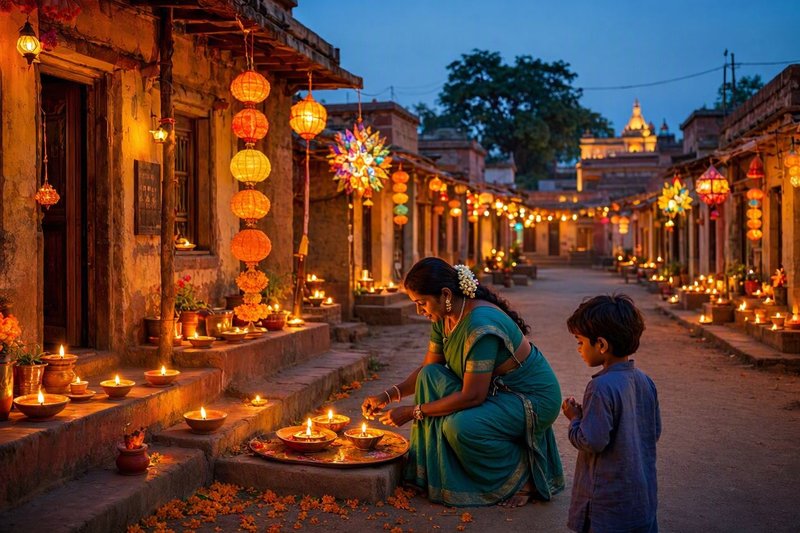
Alt text should convey the useful visual information: for example, “Illustration of a family arranging lamps outside a decorated home.” A caption can add context: “A shared evening of preparation is part of many family celebrations.” Neither needs a string of repeated festival keywords.
Finish by choosing a small, coherent set. Save originals separately, keep a note of the occasion and date, and let the final collection show people, atmosphere and meaning together.
A gallery of festival illustrations
These supplied artworks illustrate different settings and occasions. Open an image to view it at its supplied 800-pixel width.
Frequently asked questions
Can I take good Diwali photographs with a phone?
Yes. A steady position, thoughtful framing and attention to the flame’s brightness matter more than carrying a complicated setup.
Should every photograph have a greeting written over it?
No. Use text when it serves the image’s purpose. A family memory or an article illustration may be clearer with a separate caption.
Can an illustration be used as proof of an event or temple layout?
No. Label it as artwork and use current official information for dates, access and event arrangements.