At a glance
- Match the caption to what the photograph actually shows.
- Add a real detail or credit the person behind the moment.
- Use separate alt text to describe the image clearly.
Let the photograph guide your words
Start with the main subject. A close-up of a diya can take a short line; a family gathering may deserve a name or memory. If the photograph shows a rangoli someone worked hard to make, credit that person. A caption does not need to explain the whole festival every time.
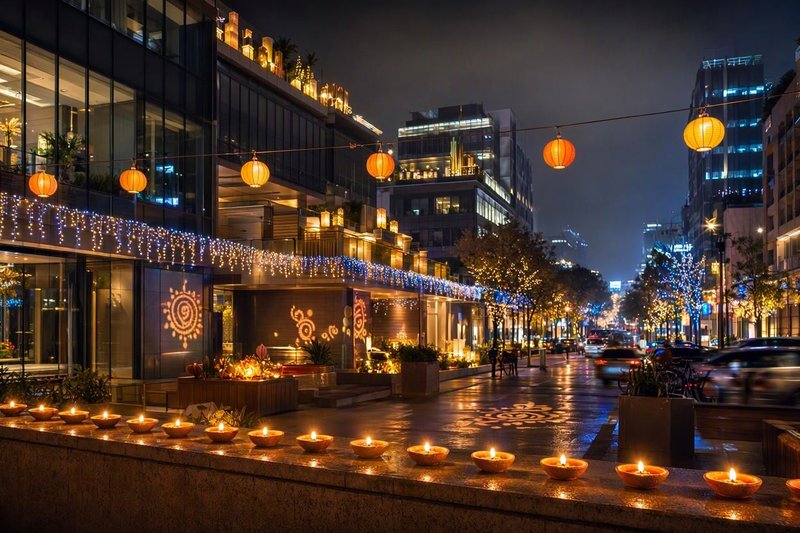
Diyas and evening light
A little lamp, a lovely evening.
Our doorstep has dressed for Diwali.
Saving a small corner of this glow.
Lights on, evening plans wonderfully simple.
The diyas are ready. So are we.
A quiet moment before the guests arrive.
Family, friends, and togetherness
Best part of the picture: the people in it.
Another Diwali for the family album.
Old stories, new photos, the same favourite people.
Everyone found a place around this table.
A full house and one more reason to smile.
This is what coming home looks like tonight.
Sweets and the festive table
Our sweetest plans have finally arrived.
One plate for sharing. Several opinions about favourites.
Saving you a sweet and a seat.
The kitchen has been busy making memories.
Diwali conversations always find their way to dessert.
A little homemade happiness, ready to share.
Rangoli, clothes, and creative details
A doorstep drawn in colour and patience.
Today’s finishing touch: a very happy smile.
Hours of careful work, one colourful welcome.
Festive clothes, comfortable shoes, excellent company.
Made by hand, admired by everyone.
Our colours have found their place together.
Simple, thoughtful, and far from home
A smaller celebration, held just as close.
Keeping a favourite tradition in a new place.
Thinking of the people outside this frame.
Grateful for another evening we can share.
Carrying a little home wherever I celebrate.
Wishing you warmth from this corner of the world.
Add one useful detail
Turn “Another Diwali for the family album” into a more personal caption by adding the place or the person who hosted. Share a location only when everyone involved is comfortable with it. For a work account, explain the actual activity shown, such as colleagues making a paper rangoli, and thank the organisers. Avoid describing every gathering as a ceremony if it was simply a social celebration.
Write alt text separately
A caption carries your voice; alt text describes the image for someone who cannot see it. For example: “Three clay diyas glow beside a red and yellow paper rangoli on a doorstep.” Name the main subject, relevant colours, and useful context. There is no need to repeat every decorative detail or the same greeting twice.
Keep the post easy to read
Use a short opening line and place any extra story below it. A small number of relevant hashtags is usually easier to read than a long block. Check names, spelling, and language characters before posting. Ask permission before sharing identifiable photographs of other people, especially children. When a photograph is an illustration or an imagined scene, describe it that way instead of presenting it as a visit or event you attended.
Frequently asked questions
Are these captions quotations from famous people?
No. They are original caption suggestions for this guide and should not be attributed to a famous person or religious text.
How can I make a short caption less generic?
Add one real detail: the host’s name, a handmade decoration, a family tradition, or the reason the photograph matters to you.
Should a caption also serve as image alt text?
They have different jobs. Keep the caption personal, and write a separate concise description of the visible image for alt text.