Govardhan Hill representation
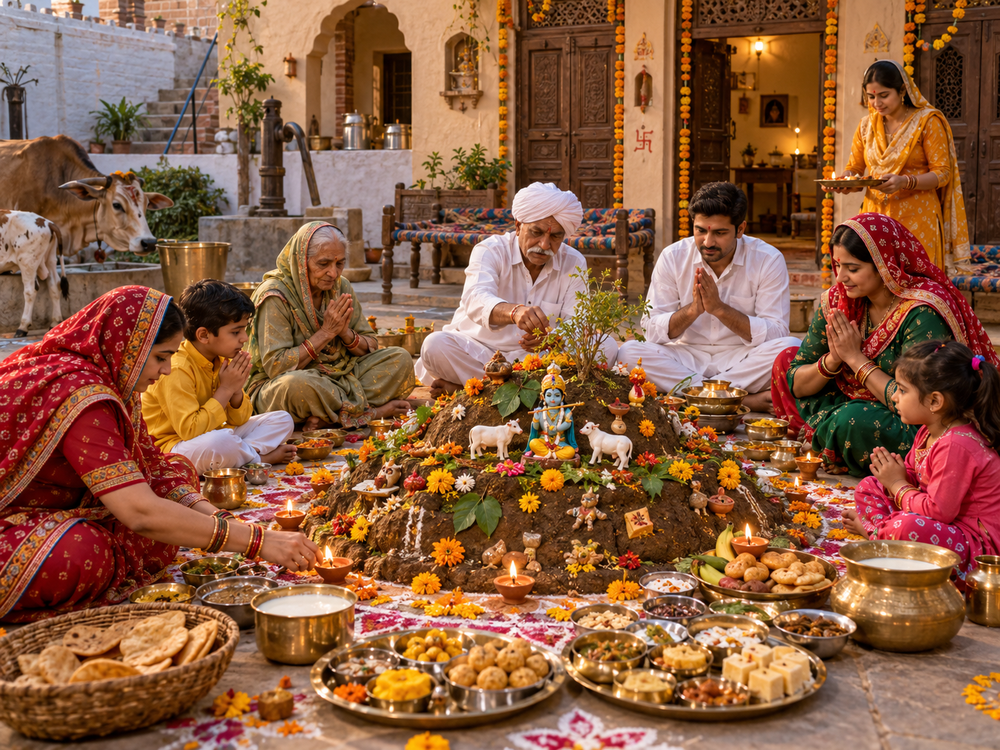
A small symbolic hill may be formed using cow dung, clay or other traditional materials, then decorated with flowers, grass and small figures.
The story of Krishna lifting Govardhan Hill, the beauty of Annakut, and the gratitude that brings communities together.
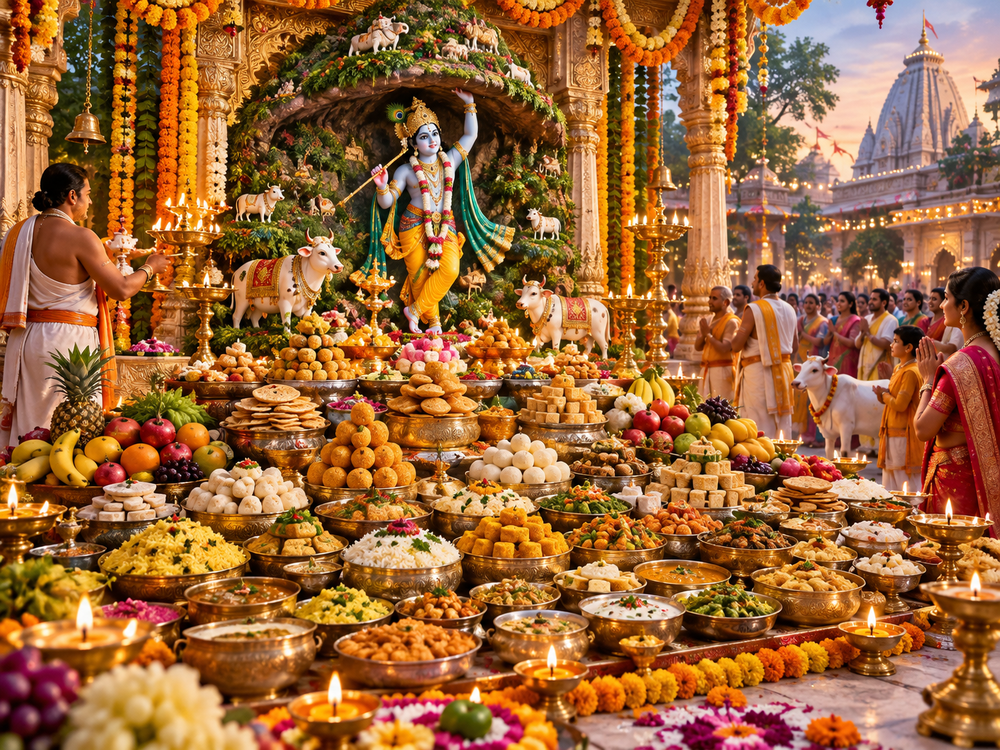
Govardhan Puja (also spelled Goverdhan Puja) is a Hindu festival especially associated with Lord Krishna and the sacred Govardhan Hill in Braj. It is also called Annakut, meaning “mountain of food,” because devotees arrange an abundant vegetarian offering as an expression of thanks.
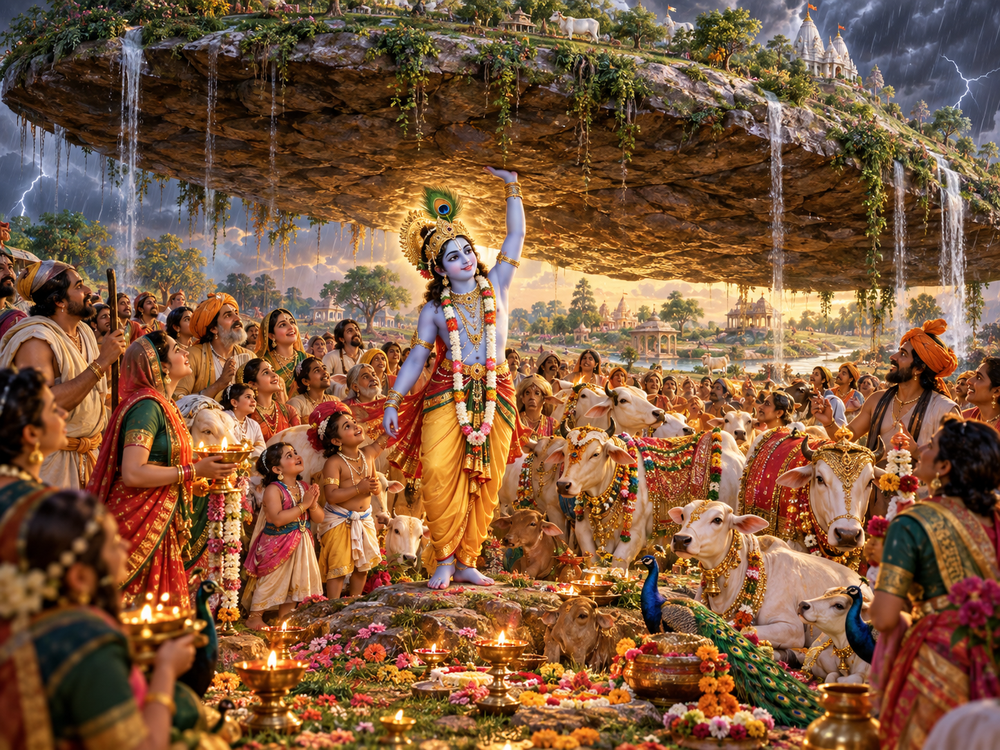
According to the Krishna tradition, when Indra sent torrential rain to Vrindavan, young Krishna lifted Govardhan Hill to shelter the villagers and their cattle for seven days. His act is remembered as a lesson in humility, faith, protection, community and reverence for the living world.
Govardhan Puja is commonly observed around the day after Diwali, on Kartika Shukla Pratipada in many regional calendars, though the civil date and sequence can vary. Mathura, Vrindavan and the Govardhan area of Uttar Pradesh are particularly associated with devotional celebrations.
For generations, the people of Braj relied on rain, grazing lands and healthy cows. The story tells that Krishna encouraged the villagers to honor Govardhan Hill and their direct sources of nourishment instead of performing a ritual motivated by fear of Indra.
Angered, Indra unleashed a fierce storm. Krishna raised the hill on his little finger, giving families, animals and the community protection. When the storm ended, Indra recognized his pride, and Krishna’s compassion became the festival’s central teaching.
For devotees, this is not merely a tale of power: it inspires gratitude toward nature, care for animals, faith during adversity and collective responsibility.
A small symbolic hill may be formed using cow dung, clay or other traditional materials, then decorated with flowers, grass and small figures.
Families prepare vegetarian bhog; many temples arrange varied dishes in a mountain-like display, sometimes following the tradition of fifty-six offerings.
Devotees sing Krishna bhajans, listen to stories and perform a respectful circumambulation of the hill representation or the sacred hill itself.
Gau Puja and appreciation for cattle reflect the pastoral setting of Krishna’s childhood in Braj.
After worship, the food is shared with relatives, neighbors and visitors, expressing generosity and belonging.
Mathura, Vrindavan and Govardhan draw devotees for temple worship and pilgrimage connected with Krishna’s leela.
A modest home observance can focus on a clean altar, a symbolic hill, simple vegetarian offerings, prayer and sharing. Explore the dedicated pages for more detail.
Read the materials checklist, seven preparation and worship steps, and Annakut explanation.
Open puja guide →Explore the symbolism of nature, the seven-step worship flow, family customs and ideas for community service.
Open interactive guide →The image collection brings together illustrations of Krishna’s story, domestic observances and regional festive settings. Select a picture to view it larger.
They are closely linked. Govardhan Puja emphasizes reverence for Krishna and Govardhan Hill, while Annakut refers particularly to the great offering of food.
In the devotional narrative, Krishna sheltered the villagers and their animals from torrential rain sent by Indra.
No. Chhappan Bhog is a revered temple tradition, but many families offer a smaller selection made with sincerity.
The Braj region of Uttar Pradesh, including Mathura, Vrindavan and Govardhan, is especially associated with the story and its celebrations.