Gratitude for nature
Govardhan is remembered as life-sustaining land: soil, water, grazing areas and all the resources that support people and cattle.
Discover the meaning behind every custom, follow a seven-step puja checklist and explore ways to practice generosity and care for nature.
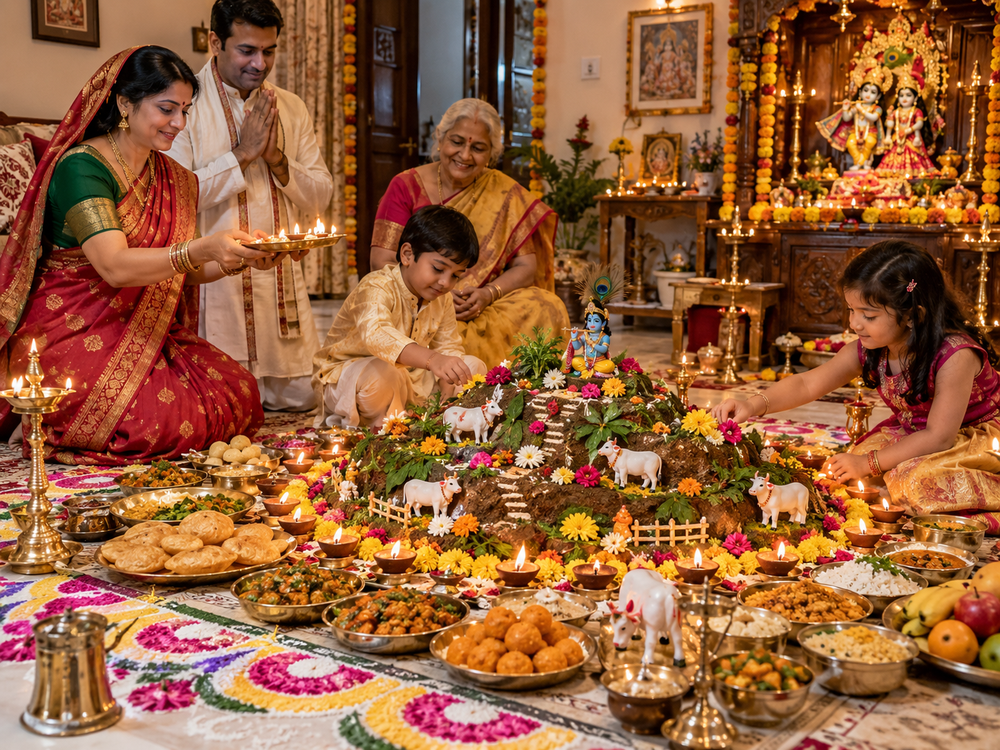
Govardhan is remembered as life-sustaining land: soil, water, grazing areas and all the resources that support people and cattle.
Krishna is said to have lifted the hill on his little finger and protected the whole community for seven days during Indra’s storm.
The festival recalls Indra’s pride being humbled, and Annakut expresses generosity through an offering prepared and shared collectively.
Open each step to review its meaning and preparation. Use the checklist to track your progress; it is not a substitute for your family or temple practice.
Clean the puja area, arrange a cloth or small altar, and place a picture or murti of Shri Krishna. Families may also prepare a courtyard space for a symbolic hill.
Traditionally the hill is modeled from cow dung; clay or other locally appropriate materials can be used. Adorn it with grass, flowers, a peacock feather, and small images representing cattle or villagers.
Cook vegetarian dishes according to family custom: grains, vegetables, lentils, fruit, milk-based foods and sweets. Some temples prepare Chhappan Bhog, traditionally described as fifty-six offerings; a modest family offering is also meaningful.
Light a diya safely, offer flowers, incense where appropriate, water and tulsi leaves in traditions that use them. Sing Govardhan-related bhajans and express gratitude for food and shelter.
Walk respectfully around the decorated Govardhan representation where there is safe space. At the sacred hill in Braj, some devotees undertake an outdoor parikrama; practices vary by tradition.
Where appropriate and safe, families show care for cows and other animals. Treat the landscape and resources sustaining the community with the same spirit of appreciation.
After offering bhog, distribute the meal respectfully to family, neighbors and guests. Food sharing is an important expression of community.
The original guide included ideas for workplaces and community groups. These suggestions translate gratitude and shared responsibility into practical, voluntary actions: not religious requirements.
Share a vegetarian potluck, express gratitude to coworkers, and collaborate on eco-friendly decorations.
Offer thoughtful festival greetings and thank those who make your work possible; avoid turning worship into a sales pitch.
Contribute a meal to a local organization, support animal welfare, or take part in a neighborhood environmental effort.
Reduce waste, recognize the people behind your work, and discuss how to use shared resources more thoughtfully.
In the Braj region, Govardhan-related temples and pilgrimage routes are particularly important. In Gujarat, Annakut can be a central part of temple celebrations following Diwali. Other families observe the occasion through a smaller home puja, a shared meal or devotional singing.
Traditional modeling materials and the scale of offerings vary widely. A respectful celebration places devotion and hospitality before display.
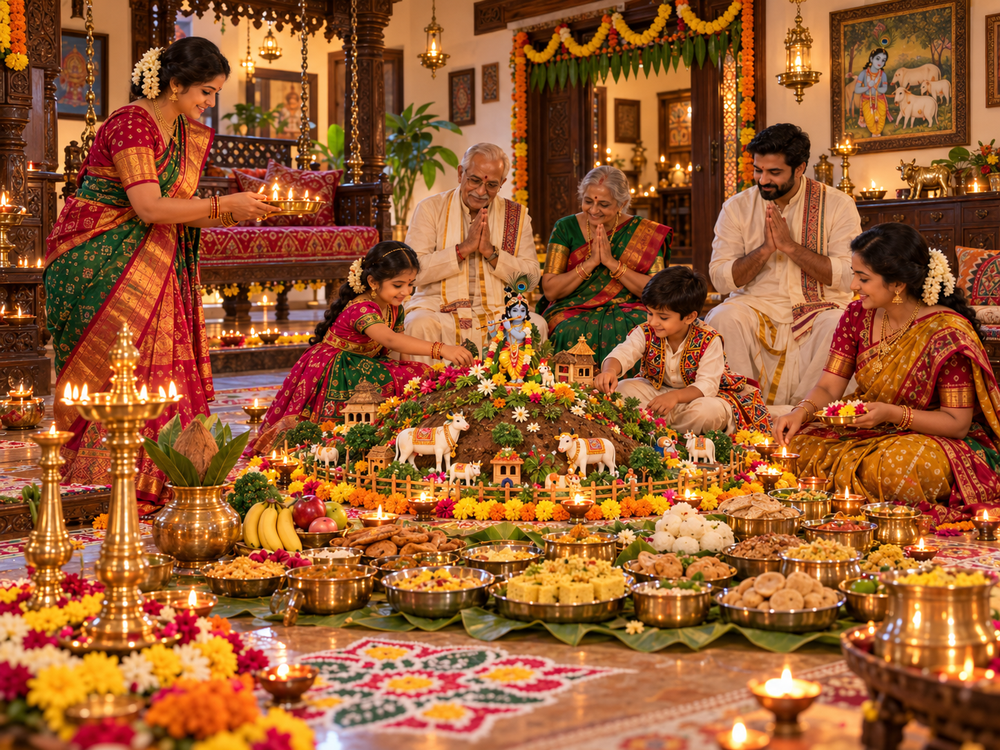
Browse regional home settings and devotional illustrations from the supplied image collection.