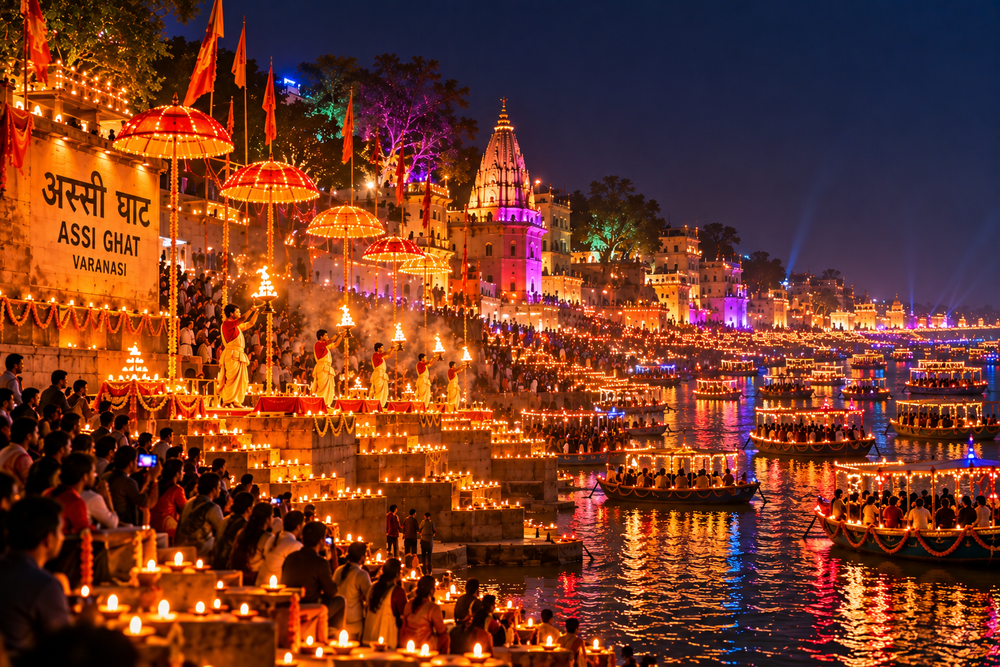
What happens during Ganga Aarti
Incredible India describes the Dashashwamedh evening Aarti as a structured ritual using elevated platforms, flowers, incense and multi-tiered brass lamps. Priests perform coordinated movements while conches, bells, cymbals and mantras shape the soundscape.
On Dev Deepawali, the ritual sits within a much larger field of lamp light. The Aarti remains a devotional act, while the surrounding ghats provide the visual scale associated with the festival.
How to watch
A land-side position offers closeness to the ritual. A boat-side position can show the entire Aarti platform in relation to the ghat and river. If photography matters, the latter can make it easier to keep the whole composition in frame, but it is more distant.
The two Aarti images in the supplied list are used here as complementary views rather than duplicates, reinforcing that the ceremony reads differently from different angles.
Respectful viewing
Do not obstruct priests, volunteers, devotees or emergency routes for a photograph. Keep flash use conservative around sacred rituals, and follow any locally posted restrictions.
The most powerful images often come from patience: letting the ceremony unfold and framing repeated lamp movements, reflections and crowd silhouettes rather than chasing every close-up.
Image gallery
Views used in this guide


FAQ
Common questions
Where is the most famous Ganga Aarti in Varanasi?
Dashashwamedh Ghat is the best-known setting for the city’s elaborate evening Ganga Aarti.
Can I photograph the Aarti?
Photography is common, but visitors should avoid obstructing worship and should follow any local restrictions.
Why does this page use two Aarti images?
The imagelist contains two separate Maha Aarti images, so the page uses both to show different visual perspectives.
Sources & verification
Festival dates and factual place descriptions were checked against the following public sources. Travel operations and festival arrangements can change.